
Acne & pores
Acne marks vs acne scars: red, brown or sunken, and what helps
Before asking which laser removes acne marks, find out which mark you have. Red marks are vessels, brown marks are pigment, depressed scars are structure, and each needs a different tool.

Written and reviewed by Dr. Hanaram Jang, Medical Director
Published / 5 min read
On this page
"How much is the laser for acne marks?"
When someone asks me this, I answer with two questions. "When you touch it, is it sunken? And is the color red or brown?" Most people say, "Um, it's just a mark."
After reading this, you will be able to answer those questions yourself, and you will see why the answer changes the treatment completely.
The misunderstanding: "acne marks" is one thing
Acne can leave three different kinds of trace. They look similar in photos. Their causes sit in different places.
- Red marks (post-inflammatory erythema, PIE): after the acne settles, enlarged vessels in the skin keep the area red. The problem is vessels.
- Brown marks (post-inflammatory hyperpigmentation, PIH): pigment left where the inflammation was. The problem is pigment.
- Depressed scars: inflammation went deep and damaged the tissue, leaving a real dip. The problem is structure.
Vessels, pigment, structure. Toning a red mark again and again may leave the redness unchanged, because it is not pigment. A vessel laser on a depressed scar will not fill the dip. That is why "which treatment for acne marks?" has no single answer.
A two-step check at the mirror
Step 1: touch it. If the surface is sunken, it is a scar, whatever the color.
Step 2: if it is flat, look at the color. Red leans PIE; brown leans PIH. To be more certain, press a clear glass gently on it. If it fades under pressure, it is likely vessels (PIE). If it stays, it is likely pigment (PIH).
Color depends on skin tone and inflammation, so marks can also look red-brown or gray-brown. Don't rely on color alone.
In practice, most faces have a mix. Red marks on the cheeks, brown marks on the chin, shallow dips below the cheekbones. Real treatment is a combination weighted by type, not one procedure.
Which treatment fits which mark
| Type | What you see | Main approach at ANDO | Note |
|---|---|---|---|
| Red mark (PIE) | Flat, red, fades when pressed | Vessel-targeting laser such as Derma V (long-pulse 532 nm) | Some fade with time, so timing and number decide scope |
| Brown mark (PIH) | Flat, brown, stays when pressed | Low-strength toning-type laser, strict sun protection | Rushing with strong energy can darken it |
| Depressed scar | Sunken surface | Resurfacing and regeneration: fractional lasers (Erbium, PicoSure Pro fractional) and RF microneedling such as Potenza | Does not improve on its own; needs a plan |
Where Potenza fits
Potenza is RF microneedling. Fine needles enter the skin and deliver radiofrequency energy at a chosen depth in the dermis. The point is not shaving the surface but triggering the dermis to remodel, with new collagen and elastic fibers forming over weeks to months. For depressed scars that changes the floor of the scar; for skin overall it can improve texture.
A 2026 retrospective study from a university hospital in Seoul (Aesthetic Surgery Journal Open Forum) looked at 50 adults with acne treated with Potenza, about three sessions on average; 47 of 50 showed clinical improvement and acne lesion counts fell. That study was about active acne, not scars, so I don't use it to promise scar results. It does support why we consider Potenza when acne and texture problems overlap.
For scars I often combine methods: injections, Skinjet, Potenza and collagen boosters. This takes time. If you need a fast result in a short window, tell me; there are quicker options for some situations, and I will be honest about which fits.
What the first consultation covers
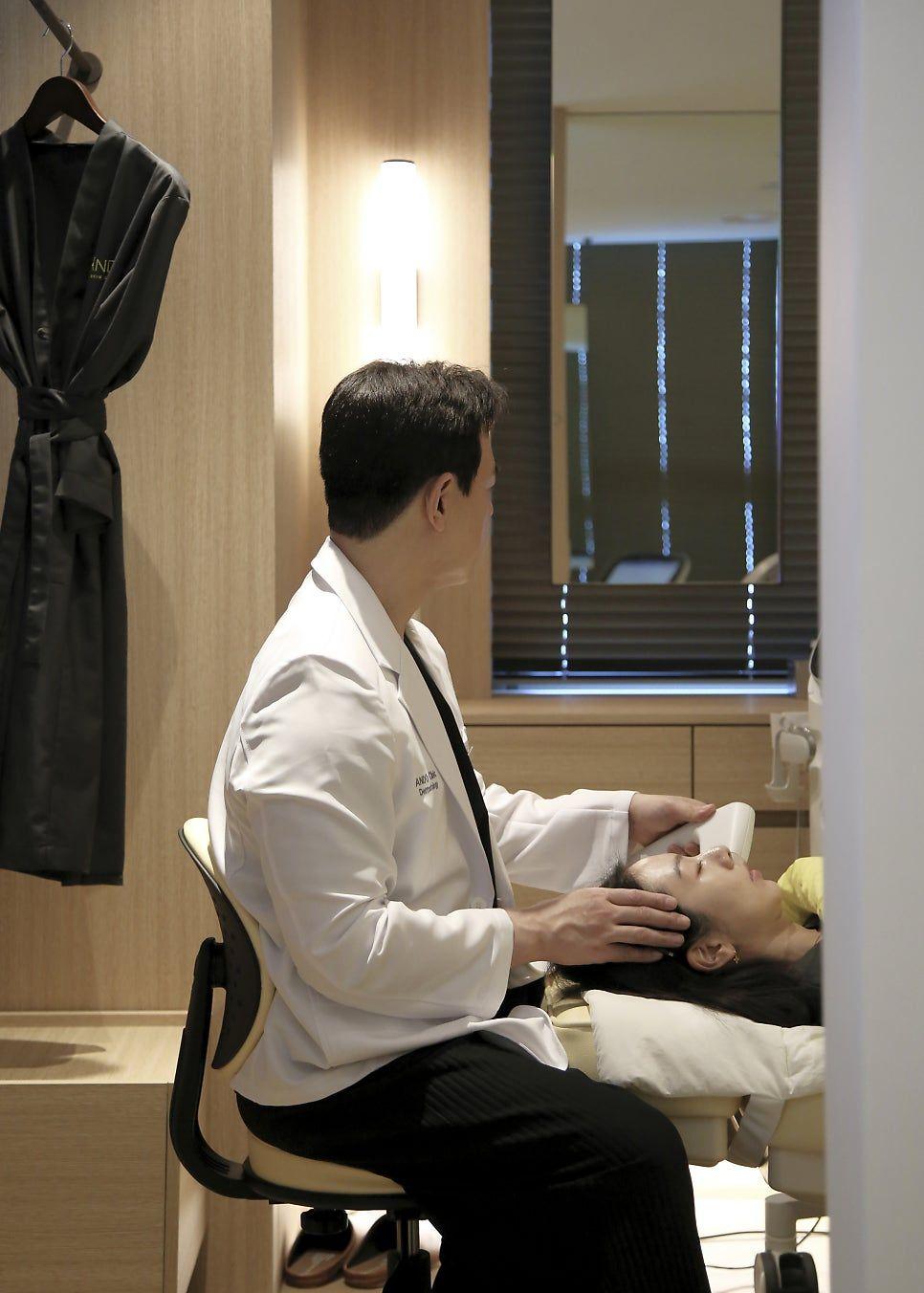
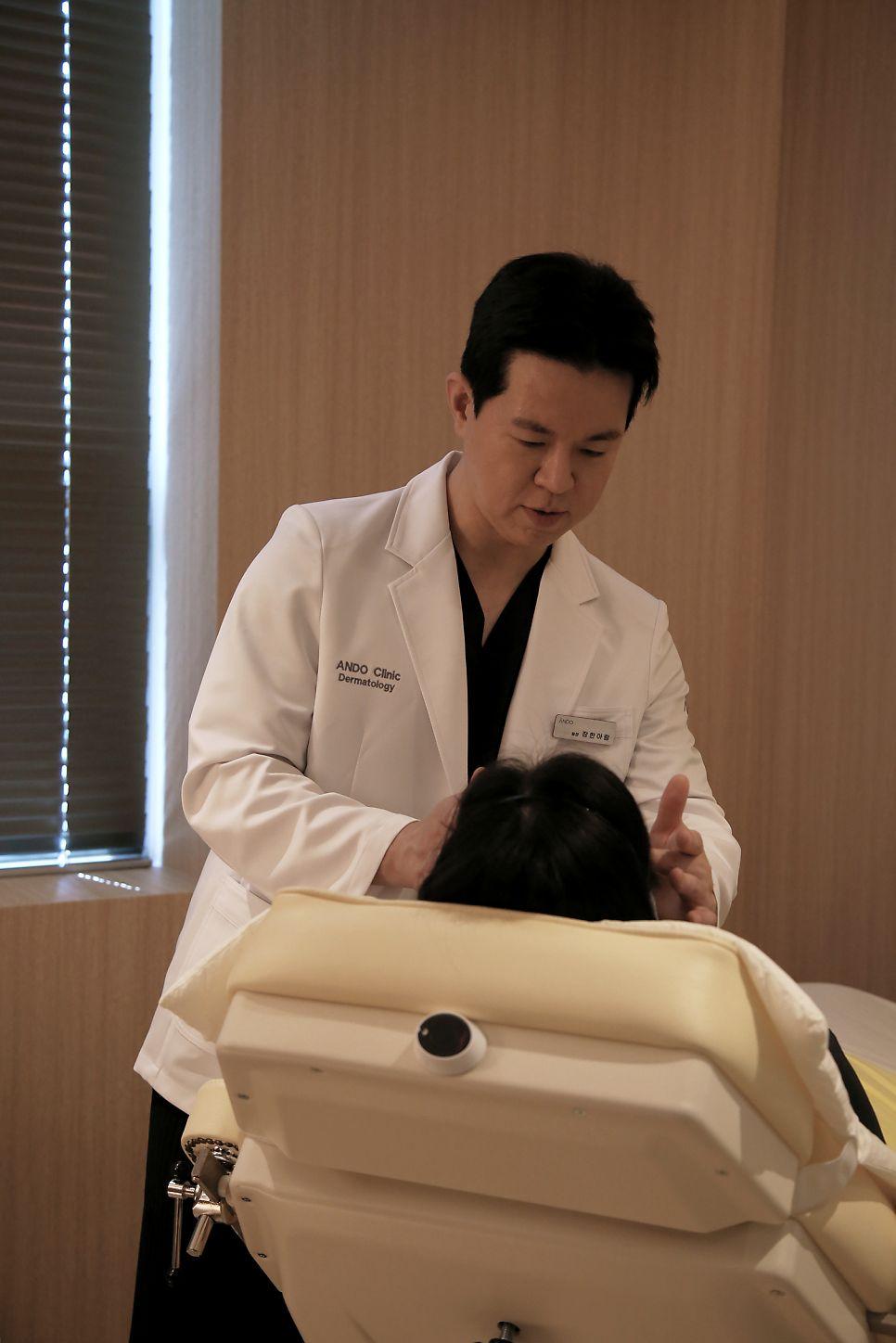
At ANDO I examine the marks under good light and magnification, sort them into red, brown and sunken, and estimate the share of each by area. Then I check whether acne is still active and what your skin has tolerated before. The plan you leave with lists what to treat first, what can wait, and what may fade on its own. You do not have to start treatment that day.
First, check this: is acne still active?
If acne is not under control, removing marks becomes a loop: acne, inflammation, mark, laser, new acne, new mark. You are erasing more slowly than you are creating.
The point to break the loop is the oil gland. At ANDO the A+ laser (1450 nm) targets oil glands to address what produces new acne, alongside our acne treatment packages such as extraction and inflammation care. For results on marks to last, this has to come first, or at least at the same time.
At home: don't squeeze or pick, which deepens inflammation and raises scar risk. Cleanse gently, moisturize, and use sunscreen daily. Overusing scrubs and peels to fade marks faster irritates the barrier and can make redness and pigment last longer.
If it were my face
I understand the hurry. People in their 20s and 30s often come in feeling the marks every time they look at a photo. But paying for an "acne mark package" in that hurry often puts money and time into the loop above. The order is simple: control acne first, identify the mark type next, then treat by type. It looks slow and is usually the fastest path.
Planning around a trip to Seoul
- Diagnosis and acne control fit a short trip well. A first session for marks can be added if your skin allows.
- Downtime varies by treatment. Fractional lasers and Potenza can cause redness, swelling and small crusts. Ask your doctor how many days to allow before photos or flying; we plan the order around your departure date.
- Scar treatment is a series. Ask for a written plan and settings so you can continue at home or on your next visit.
- Sun during the trip: brown marks darken with UV. Reapply sunscreen while sightseeing.
- Payment: prices are listed in KRW without 10% VAT; we accept major international cards, Alipay, WeChat Pay and KRW cash.
Prices for acne packages, fractional lasers and Potenza are on our acne, pores and scars price list. See also our page on pores and scar treatment.
Summary
Acne leaves three kinds of trace: red marks (vessels), brown marks (pigment) and depressed scars (structure). Touch, then check the color, then press with a glass. Match the tool to the cause, and get active acne under control first.
Results differ by scar type, skin and number of sessions. Treatments can cause redness, swelling, crusting and temporary darkening.
If you are not sure which marks you have, send close-up photos in daylight from the front and side on WhatsApp, and tell us whether you are still breaking out. We will tell you what we see and what we would treat first. When you are ready, book an acne scar consultation.
Questions
Will red acne marks fade on their own?
Some flat red marks fade gradually over time. How long depends on how deep the inflammation was and on the skin. If they persist for months or the redness does not settle, it is worth checking the vessel changes and planning treatment.
Does pico toning work on brown acne marks?
If the brown mark is melanin-based PIH, laser treatment can be considered. The right method depends on pigment depth, skin type and whether acne is still active. Sun protection is essential, and rushing with strong energy can make it darker.
Can I treat marks while I still get new acne?
If new acne keeps appearing, controlling the inflammation has to come first or at least at the same time. Otherwise new marks appear faster than old ones are removed.
How long does depressed scar treatment take?
Depressed scars do not improve on their own and usually need several sessions over time. If you need a fast visible change before a specific date, tell your doctor; scar treatment may not be the right first step for a short window.
Results vary from person to person. Side effects such as redness, swelling or bruising can occur. The doctor will explain the risks for your treatment at the consultation.
Related articles
Enlarged pores: three types and what actually helps each
Pores can't be removed, but they can look less obvious. Whether that takes oil control, dermal support or scar treatment depends on which of three types you have.