

Botox & filler
Why filler looks unnatural: it's position, not volume
Two people can receive the same amount of the same filler and get opposite results. What decides it is where the filler goes, at what depth, and why that spot sank in the first place.

Written and reviewed by Dr. Hanaram Jang, Medical Director
Published / 6 min read
On this page
A patient once told me, "I went to a clinic near my house, had filler, looked in the mirror, and something was off." Her cheeks looked puffy. The area around her mouth looked bunched. Her face looked heavier than before.
Her first thought was that she had too much filler. That can happen. But more often, the problem is not the amount. Two people can receive the same amount of the same product and one looks rested while the other looks "done." The difference is where the filler went, at what depth, and whether anyone asked why that area had sunk.
The misunderstanding: "unnatural means too much"
When filler looks wrong, the instinct is to blame volume. That leads to a cycle: a little more here, a little more there, each time aiming at the area that looks hollow. Over a few years the total volume goes up and the proportions of the face drift.
I think the order should be reversed. Decide where filler is needed first. Then use only what that spot needs. Some areas should stay empty, and that is part of the design too.
Step 1: Find the cause, not just the hollow
When a cheek looks sunken, the quick fix is to inject directly into the hollow. But why did it sink?
Facial aging happens in several layers at once: the skin, the fat and volume layer, and the support structures underneath. A hollow can come from two quite different causes:
- Volume loss: the fat layer itself has decreased.
- Weakened support: the structures that held tissue in place have loosened, so tissue has moved down.
If you fill the visible hollow without knowing which one it is, you can create volume that does not match the flow of the whole face. The face looks heavier, or an unexpected area starts to stand out.
I often compare it to building. Filler is a material. You need a plan before materials, and the amount is decided inside that plan.
Step 2: Position and depth decide what filler does
Hyaluronic acid filler does a different job depending on the layer.
| Placement | What it does | Risk if misused |
|---|---|---|
| Deep, at a specific support point | Props up the tissue above it and tidies the contour | Extra volume where support is already enough makes proportions look off |
| Shallow | Softens fine lines and small irregularities | Too shallow or too much can show through or feel lumpy |
If the cause is deep and only the surface is filled, the volume goes up and the problem stays. A small amount in the right place and a large amount in the wrong place share a product name, but they are different treatments.
What "ligament filler" means
Patients now ask me about "ligament filler." The face has retaining ligaments: fibrous structures that anchor skin and soft tissue to deeper layers. Examples are the zygomatic ligament around the cheekbone and the mandibular ligament near the lower jaw.
With age, collagen in the dermis decreases, fat compartments change size and position, and the bone changes gradually. The relationship between ligaments, fat and skin changes with it. Nasolabial folds can deepen and the jawline can blur.
Ligament filler is an approach that plans placement around these deep support areas instead of simply filling the fold. It does not mean injecting into the ligament to regenerate or tighten it. It may suit:
- Loss of midface volume with a change in front-cheek contour
- Nasolabial folds together with changes in surrounding volume
- A blurred lower jawline
- People who want balance without adding a lot of overall volume
When skin elasticity is low or sagging is advanced, filler alone may not give the change you want. Lifting such as Ultherapy or a thread lift may be the better tool.
Step 3: Three questions to ask before the amount
In any filler consultation, ask these before asking about brand or cc:
- Is this area sunken because volume decreased, or because the support structure changed?
- Where exactly, at what depth, and why there?
- Filler from before may still be there. Are you including that in the plan?
The third one is easy to skip and matters more than people expect. Adding filler where old filler remains can stack more volume than planned. Checking your history is part of the design.
Safety: what to watch and when to seek care immediately
The face has blood vessels and nerves that run differently in each area, and the deep support areas are close to some of them. Filler injected into a vessel can block it, which can lead to skin necrosis or, rarely, vision damage.
Common reactions are redness, swelling, tenderness and bruising at injection sites. These usually settle within a few days to two weeks.
Do not wait if you notice any of these. Contact the clinic that treated you or go to emergency care right away:
- Severe pain that is different from normal soreness
- Skin near the injection site turning white, gray or bluish
- Blurred vision or any change in what you see
- Slurred speech or weakness on one side, or other signs of stroke
If it were my face
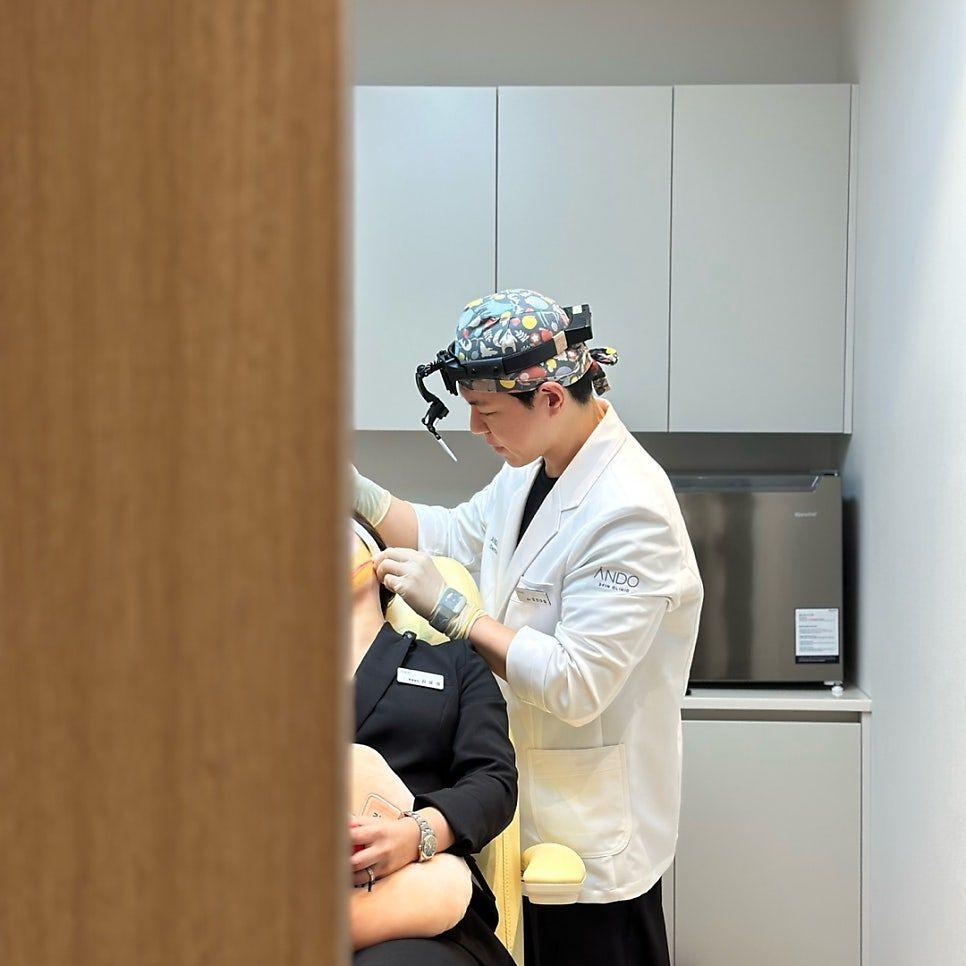
I would want the doctor to tell me where filler is needed, where it is not, and when filler is not the right tool. At ANDO I do the consultation myself. I will not inject filler just because you asked for it. If old filler is causing the problem, I may suggest dissolving it first and coming back. Please don't take that personally. If you don't need filler now, telling you so is part of my job.
Planning filler around a trip to Seoul
- Swelling and bruising can take a few days to two weeks to settle. Schedule filler early in your trip, not the day before important photos.
- Before flying home, leave enough days in Seoul that we can check you if anything feels unusual. Tell us your departure date at consultation.
- Bring your history: product names, areas and approximate dates of past filler. Photos from before those treatments help.
- After you return, know where emergency care is near you, and keep our contact details in case you have questions about how things are settling.
Filler brands and prices per 1 cc are on our filler price list (KRW, 10% VAT not included). For details on the treatment itself, see our dermal filler page.
Summary
Unnatural filler is usually a position problem, not a volume problem. Find out why the area sank, place filler at the depth that matches the cause, account for filler already there, and leave some areas alone.
Results vary with anatomy, skin condition and history. Filler can cause redness, swelling, bruising, asymmetry and nodules, and rarely serious vascular complications.
If your face feels heavier after past filler, or you want to know whether you need filler at all, send a few photos and your treatment history on WhatsApp before your trip. I would rather tell you honestly before you fly than in the consultation room. When you are ready, you can book a consultation.
Questions
Can old filler affect a new filler treatment?
Yes. Filler from earlier treatments may still be there. Adding more on top can build up more volume than expected, so your treatment history is part of the plan. In some cases we suggest dissolving existing filler before adding anything.
Does ligament filler lift the face like surgery?
No. Placing filler in deep support areas can improve contour in some patients, but it is not the same as surgical lifting, and more research on its effects is still needed. When sagging is advanced, filler alone may not be enough.
Which filler brands do you use?
Our price list includes a Korean premium HA filler, Rejuviel, Belotero (including a fine-line Belotero option) and Juvederm or Restylane. The brand matters less than where and how deep it is placed.
Is there an age when ligament filler is appropriate?
There is no fixed age. The decision depends on your bone structure, fat compartments, skin elasticity and the actual change in your contour.
Results vary from person to person. Side effects such as redness, swelling or bruising can occur. The doctor will explain the risks for your treatment at the consultation.
Related articles
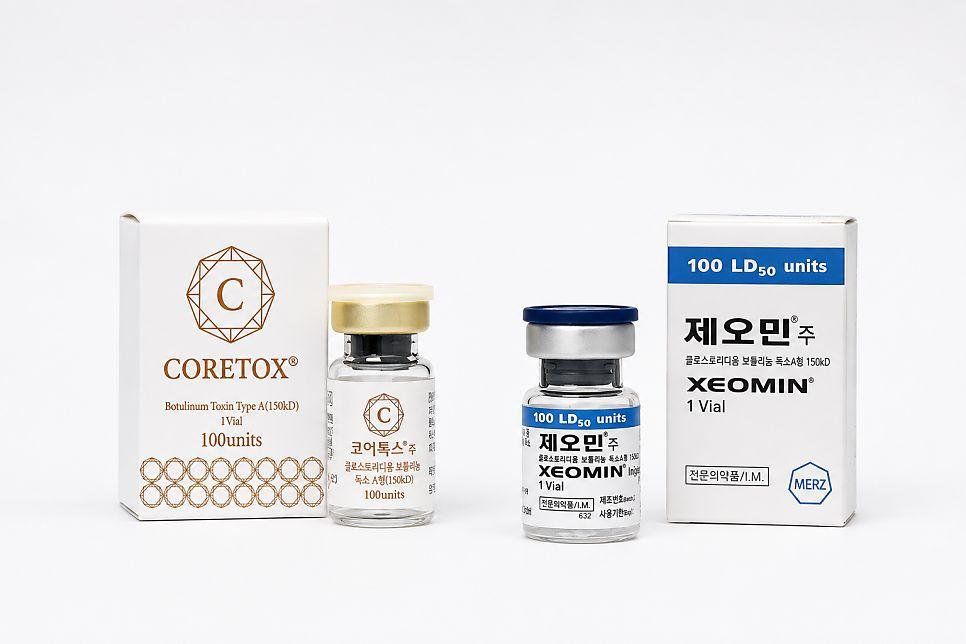
Jaw Botox and trapezius Botox in Korea: timing, units, brands
Jaw and shoulder Botox work by reducing muscle use, so the visible change comes weeks later. Here is how to choose a brand, what 50U and 100U mean, and how to plan around a trip.