
Lifting
ONDA for a double chin: when to reduce before you lift
A heavy jawline is either loosened or thick. Lifting fixes loosening. ONDA reduces thickness. If you have both, the order matters: reduce first, then lift.

Written and reviewed by Dr. Hanaram Jang, Medical Director
Published / 5 min read
On this page
"I lost 5 kg, but my jawline looks the same." "I had Ultherapy, but my double chin is still there." These sound like two different problems. They come from the same misunderstanding: treating every jawline concern as sagging, and so as something to pull.
This post is about ONDA, the device that reduces volume rather than pulling. Once you see what it does, both questions above make sense.
A heavy jawline has two causes
When the lower face looks heavier in the mirror, there are two possibilities.
Loosening. The skin and the SMAS have relaxed and slid down. The volume is the same, but its position dropped. This is the territory of pulling treatments such as Ultherapy.
Thickness. The fat under the chin and in the lower cheeks is thick, so the border looks blunt. Pulling does not remove volume. This is reducing territory, and that is where ONDA sits.
A 30-second self-check. Lightly pinch the skin under your chin and below your cheek between thumb and index finger. If you feel a thick fold, volume is likely the main cause. If the fold is thin but the area still looks low, structure is likely the main cause. If it is both, which is the most common case, the question becomes one of order.
How ONDA reduces volume
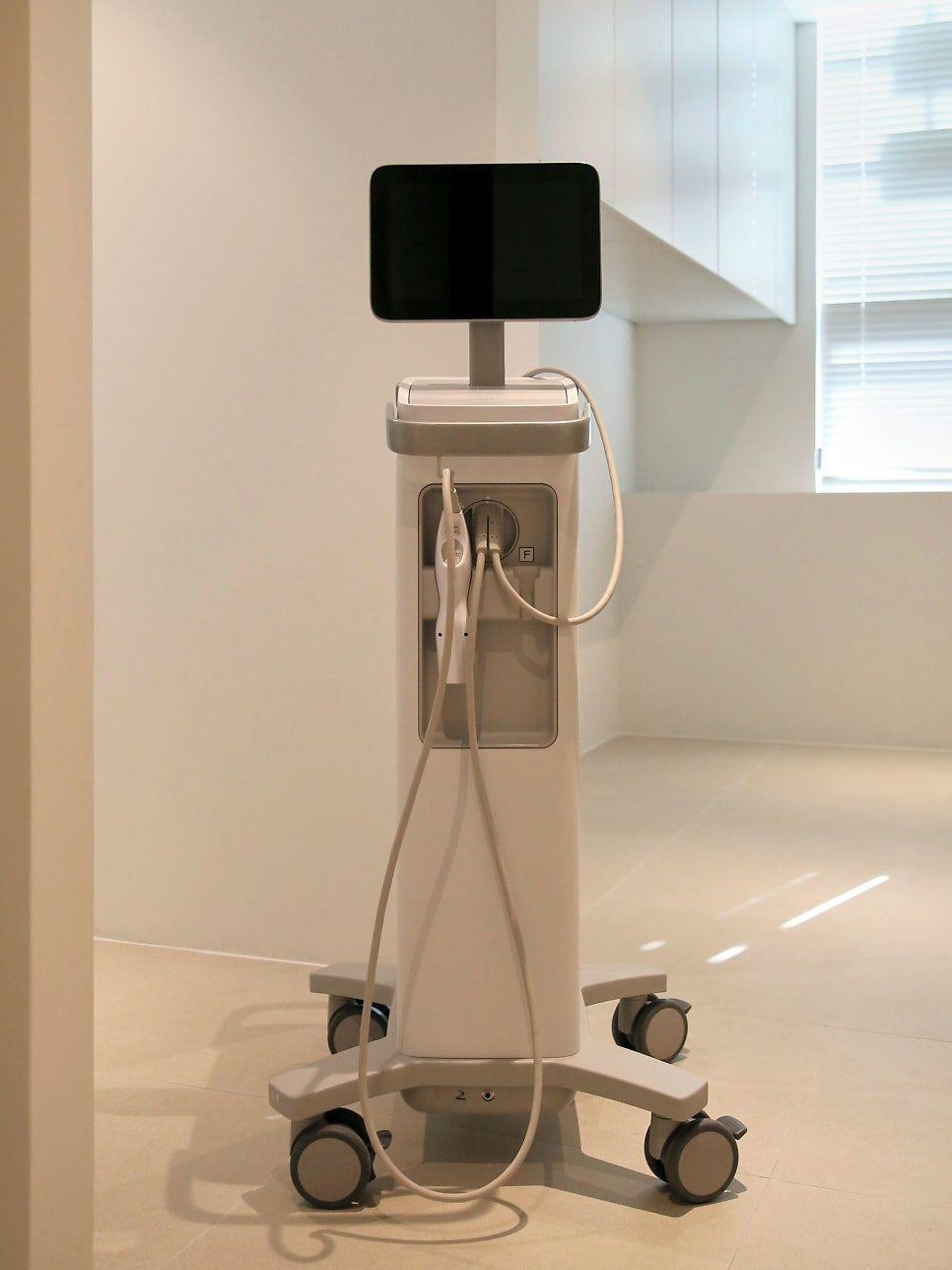
ONDA uses 2.45 GHz microwave energy. This is a different energy from the ultrasound in Ultherapy and Sofwave, and the radiofrequency in Thermage and XERF.
The key is selectivity. Microwaves deliver heat to the fat layer, while the handpiece cools and protects the skin surface. ONDA uses different handpieces for different depths: a shallower one works in the dermis for firmness, and a deeper one works in the fat layer to reduce volume.
So ONDA is not a "fat-burning only" treatment. It reduces fat volume and also works on skin firmness. But its main role differs from Ultherapy and Thermage, which work on collagen and structure. ONDA works on volume.
That also answers the two questions at the top. Losing weight may not change the jawline because body fat and local facial fat respond differently. And a double chin that stays after Ultherapy may not mean Ultherapy failed. That chin may have been a reducing problem from the start.
What the studies show
The source research here is limited, and I want to be precise about it.
- 2022, Journal of Cosmetic Dermatology. 48 adults received microwave treatment under the chin: 6 sessions, 2 weeks apart, about 10 minutes each. At 12 weeks after the last session, the fat score fell from 3.4 to 1.7 and the laxity score from 3.7 to 2.4, both statistically significant. Of 47 who answered a survey, 33 (70.2%) were satisfied or very satisfied. No serious adverse events were reported. This was a single-group study without a control group, using a study protocol.
- 2025, Lasers in Medical Science. 10 women with moderate to severe laxity under the chin received two 2.45 GHz microwave sessions 30 days apart. At 12 weeks, the average laxity score improved from 3.6 to 2.3, with no notable adverse events. The sample was small.
These studies show the possibility of addressing fat and laxity under the chin together. They do not mean everyone gets the same degree of change.
Reduce first, then lift
If volume and sagging appear together, the order affects the result.
- Reduce volume. Use ONDA or a similar treatment to thin the area under the chin and lower cheeks. This makes what you will lift lighter.
- Lift structure. On a lighter face, use Ultherapy or a similar device to pull loosened structure. The same lifting works more efficiently.
- Refine and maintain. Add skin-quality or firmness treatment if needed, and keep your weight stable.
Think of lifting a curtain. To raise it neatly, you take the heavy items out of its pockets first. Lifting with the weight still in is harder, and it drops again. If you reduce volume after lifting, the line you created can change.
When ONDA is not the target
Not everything that looks thick under the jaw is fat. Puffiness that is worse every morning may be a circulation issue. Width at the side of the jaw that hardens when you clench your back teeth is usually the masseter muscle. Muscle is not ONDA's target. That is a job for jaw Botox.
If your face has little fat and the skin itself has loosened, reducing fat is not the answer. Firmness-focused lifting fits better. Telling fat, swelling and muscle apart is the first step of an ONDA consultation. If the self-check felt unclear, that is a sign you need a diagnosis.
If it were my face
ONDA is not a flashy device. It does not show a dramatic pull, and its name is not famous. But I call it the device that completes the order. A lifting plan that skips a volume problem is unfinished, however good the device.
If I pinched under my own chin and found a thick fold, I would reduce first and lift second, not the other way around.
Planning ONDA around a Seoul trip
Our ONDA menu lists sessions by energy: 80,000 J (₩890,000), 100,000 J (₩990,000) and 120,000 J (₩1,090,000) per session, and a 3-session package at 100,000 J (₩2,390,000). Prices are in KRW as of November 2026 and exclude 10% VAT; see the price list.
ONDA does not have a fixed recovery period in our treatment standards, so Dr. Jang will explain what to expect for your plan. Because some plans use more than one session, tell us how often you visit Seoul. We can plan the first session on this trip and suggest how the next ones fit your return visits.
Book ahead, as we are closed on Sundays and public holidays. We are a 3-minute walk from Exit 2 of Jamsilsaenae Station (Line 2), near Seokchon Lake.
Summary
- A heavy jawline is loosening, thickness, or both.
- ONDA reduces fat volume and supports firmness; it does not pull.
- With both problems, reduce first, then lift, then refine.
- Swelling and jaw muscle are not ONDA targets.
Results vary between individuals. Redness, swelling, tenderness and other reactions can occur after energy-based treatments; suitability is decided after examination.
Send us a front photo and a side photo of your jawline on WhatsApp, and tell us what the pinch test felt like. Our team will share Dr. Jang's first view on whether your concern looks like fat, sagging or muscle. Then book an ONDA consultation for your dates in Seoul.
Questions
Is ONDA a weight-loss treatment?
No. It is a non-surgical treatment for localized fat under the chin or in the lower face, and it also considers skin firmness. It does not reduce body weight.
Does ONDA work for a double chin?
It can be considered when there is fat under the chin, with or without some skin laxity. In a 2022 study of 48 adults, fat and laxity scores under the chin improved significantly 12 weeks after the last session. Individual results vary.
Can I get ONDA if my face is already thin?
If you have little facial fat, reducing fat needs careful judgment. When loose skin is the main cause, improving firmness usually comes before reducing fat.
My lower face got wider. Is that always fat?
No. Puffiness that is worse in the morning may be swelling, and width at the side of the jaw that hardens when you clench is often the masseter muscle. Muscle is treated differently, for example with jaw Botox.
Results vary from person to person. Side effects such as redness, swelling or bruising can occur. The doctor will explain the risks for your treatment at the consultation.
Related articles
Planning lifting treatment around a Seoul trip: timing and order
Every lifting treatment has two clocks: how fast you recover and how slowly results build. Plan a Seoul trip around both, and choose boosters by their recovery time.
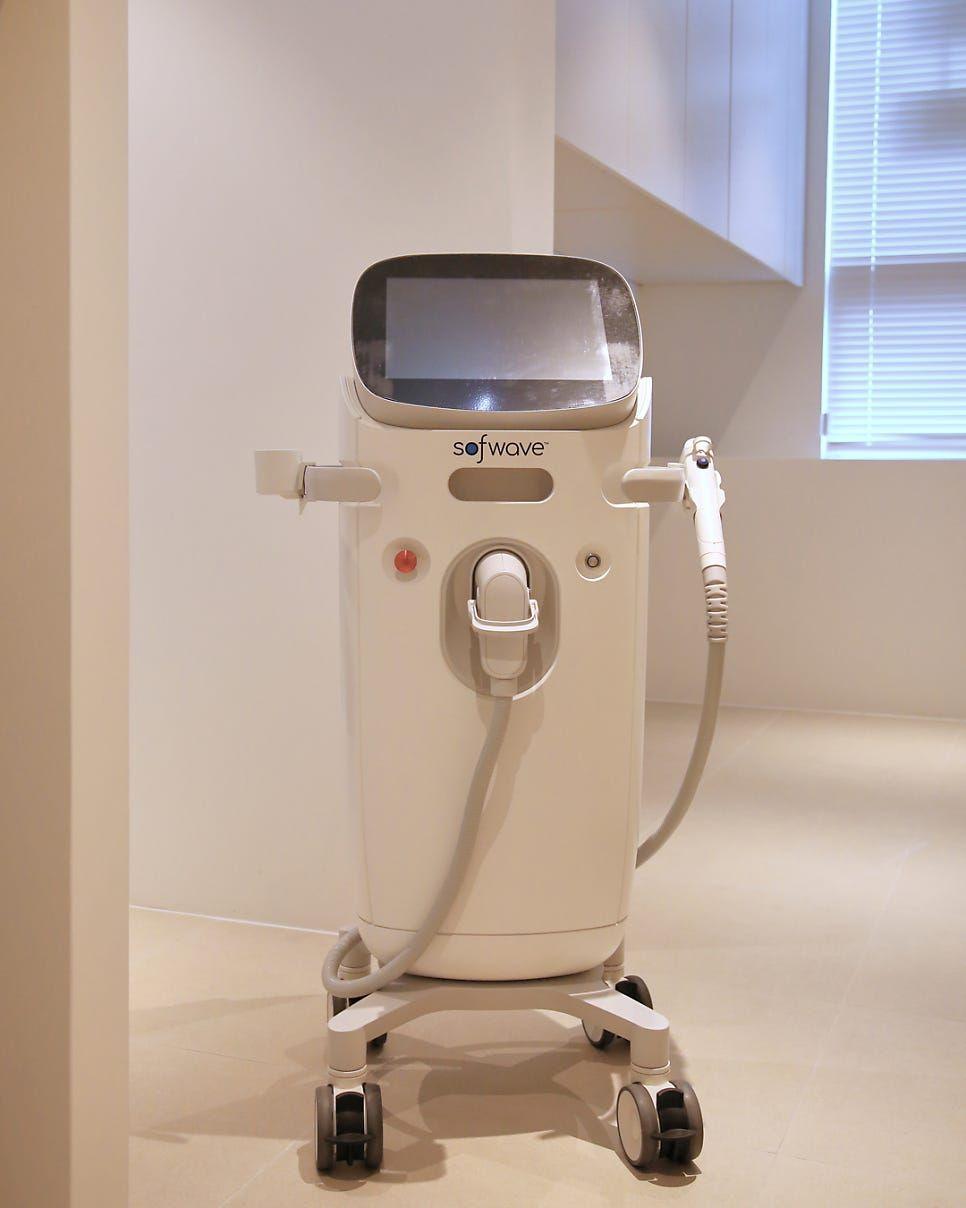
Sofwave for fine lines and pores: who it suits, who it doesn't
Sofwave is not a lighter Ultherapy. It works on a shallower layer, the mid-dermis, and for fine lines around the eyes and mouth it is often the first device I look at.
Thermage FLX in Korea: pain, shots and when results show
Thermage FLX pain is half signal and half warning. What makes it work is reaching the right temperature evenly, and the result shows over months, not on the day.