
Lifting
Ultherapy, Thermage, Sofwave or ONDA: which lifting fits you
Sagging can start in the skin, the fat layer or the deep SMAS. Each lifting device reaches a different layer, so the right choice starts with the layer, not the brand.

Written and reviewed by Dr. Hanaram Jang, Medical Director
Published / 6 min read
On this page
The sentence I hear most often in my consultation room is "I'm here for Ultherapy." Patients have watched videos, read reviews and picked a device before they sit down. At ANDO Clinic Jamsil we have five lifting devices, and in about half of consultations I end up suggesting something different from what the patient planned.
This guide explains why. It covers Ultherapy Prime, Thermage FLX, Sofwave, XERF and ONDA, which skin layer each one reaches, and how to match them to what you see in the mirror.
"Sagging" is three different problems
Patients use one word, sagging, for three separate changes.
The skin layer. Collagen, elastin and hyaluronic acid in the skin decline with age or other causes. Skin gets thinner, fine lines appear and pores look stretched. This is loss of elasticity.
The fat and volume layer. Some areas hollow out while others get heavier. Deep fat tends to shrink and shallow fat tends to increase. Under-eye hollows, the fullness above smile lines, jowls and a double chin belong here. This is volume out of balance.
The SMAS layer. The SMAS is the fascia that holds the face up, together with the retaining ligaments. When it loosens, the jawline softens and smile lines deepen. This is sagging in the narrow sense.
One concern in the mirror can come from any of these layers, or from several at once. Each device reaches a different layer, and that is the whole basis for choosing.
Five devices, five target layers
| Device | Energy | Main layer | Typical concern |
|---|---|---|---|
| Ultherapy Prime | Focused ultrasound (HIFU) | SMAS fascia | Jawline, jowls, deep smile lines |
| Thermage FLX | Monopolar radiofrequency | Full dermis | Laxity, fine lines, pores |
| XERF | Monopolar RF, two frequencies | Shallow and deeper skin layers | Laxity, with less discomfort |
| Sofwave | Parallel-beam ultrasound | Mid-dermis (about 1.5 mm) | Fine lines around eyes and mouth, texture |
| ONDA | Microwave | Fat layer and dermis | Double chin, heavy lower cheeks |
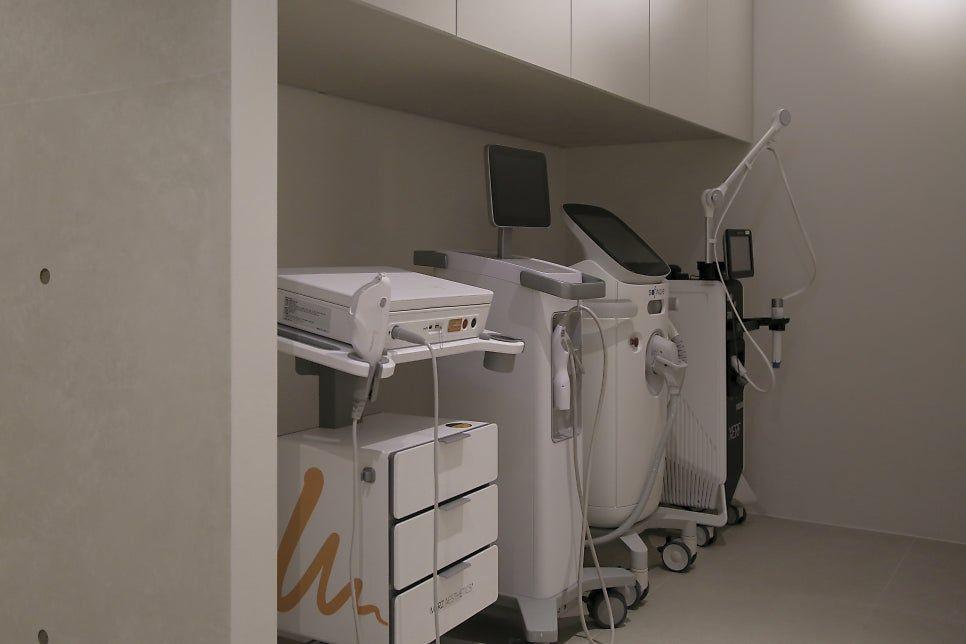
Ultherapy Prime focuses ultrasound into points deep in the SMAS. It is the core option when the jawline is the main problem. It also shows a real-time ultrasound image, so the doctor can see the layers during treatment.
Thermage FLX heats the whole dermis evenly with radiofrequency to start collagen remodeling. It firms the skin itself rather than pulling deep structures.
XERF is also monopolar radiofrequency. It uses two frequencies (2 MHz and 6.78 MHz) to reach both shallow and deeper layers, with cooling and pulse design meant to reduce discomfort.
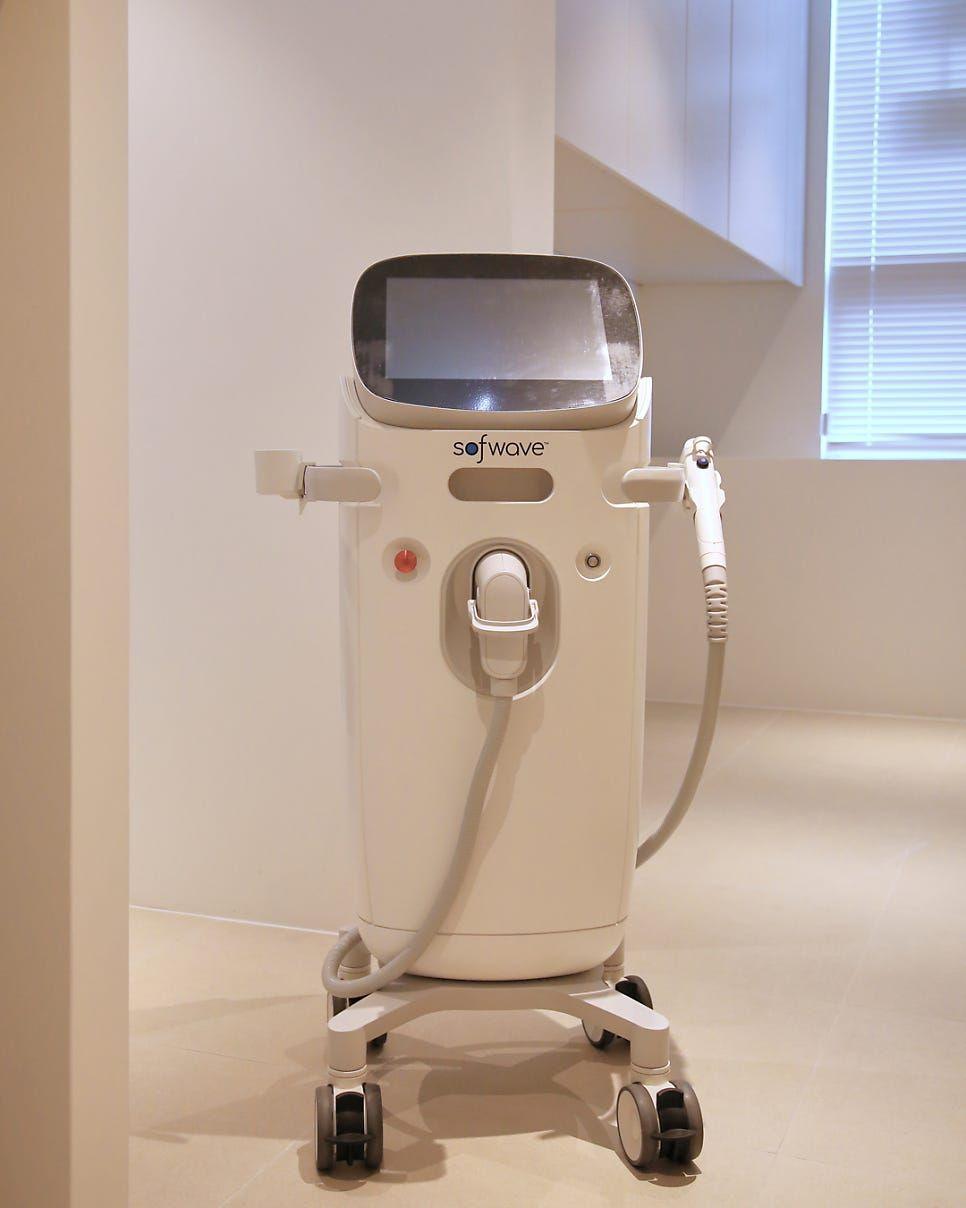
Sofwave sends parallel ultrasound beams to the mid-dermis at about 1.5 mm. It works shallow and evenly, which suits fine lines around the eyes and mouth, texture and pores.
ONDA uses microwave energy that heats the fat layer while the handpiece cools the skin surface. A shallow 3 mm tip works in the dermis and a 7 mm tip works in the fat. ONDA reduces volume. It does not pull.
These devices do not compete with each other. Asking "Ultherapy or Thermage?" is like asking a golfer "driver or putter?" You need to know the distance to the hole first.
The question I ask before naming any device
I don't open a consultation with device names. I ask: "When you look in the mirror, what bothers you most?"
- Jawline and smile lines (structural type). This is an SMAS problem, so I look at Ultherapy first.
- Loose skin, fine lines, pores (elasticity type). This is a dermis problem. I choose among Thermage FLX, XERF and Sofwave by depth and by how much discomfort you want to accept.
- Double chin, full lower cheeks (volume type). This is a fat-layer problem. I consider ONDA to reduce volume before any pulling.
- Two or three of the above (combined type). This is the most common. Here the answer is an order, not a device: reduce, then lift, then refine.
A quick self-check for the volume type: pinch the skin under your chin and below the cheek between thumb and index finger. A thick fold suggests volume. A thin fold that still looks loose suggests structure. If you can't tell, that is a reason to be examined.
Sometimes none of the three layers shows a clear problem yet. Then the right answer is "you don't need this now," and I say so.
Why a clinic with five devices still says "not yet"
We keep five lifting devices so we can fit the device to the face, not the face to the device. When the only tool is a hammer, every problem looks like a nail.
A clinic with one device is not a bad clinic. But if the consultation always ends with the device that clinic owns, ask why. A good consultation explains your layers before it mentions a brand. One more test: ask "Why this treatment for me?" and listen for an answer about your face, not about the machine.
If it were my face
I'm a man in my 40s. What I notice first in my own face is the jawline. So I would put Ultherapy at the center, and add a dermis treatment later when pores and texture start to bother me.
That is the answer for my face. Someone the same age could get the opposite answer. One diagnosis is faster than reading a hundred comparison posts.
Planning lifting around a Seoul trip
Most of these devices fit a short trip. Under our clinic's treatment standards, Ultherapy, Thermage and Sofwave allow a same-day return to normal plans, though redness, swelling or tenderness can appear and varies by person. For XERF and ONDA, Dr. Jang will confirm the expected recovery for your plan.
No device gives the final result on the day. Ultherapy changes tend to appear gradually from 3–4 weeks, and Thermage changes over 1–3 months. You will most likely see the result at home, not in Seoul. Plan important photos with that in mind.
Practical points for visitors:
- Book ahead. We are open Monday to Saturday and closed on Sundays and public holidays.
- Prices on our lifting price list are in KRW and exclude 10% VAT. The final plan and price are confirmed in consultation before anything starts.
- We are near Jamsilsaenae Station (Line 2), Exit 2, about a 3-minute walk, close to Seokchon Lake and Lotte World Tower.
- You don't have to decide in the consultation room. Many visitors take the plan back to the hotel and decide the next day.
Summary
- "Sagging" can mean skin, fat or SMAS changes, and most faces show more than one.
- Ultherapy lifts the SMAS, Thermage and XERF firm the dermis, Sofwave refines the shallow dermis and ONDA reduces fat.
- Combined types need an order: reduce, lift, refine.
- Results build over weeks to months, so plan around your return home.
Results vary between individuals. Redness, swelling, tenderness and other side effects can occur after energy-based treatments, and suitability is decided only after an in-person examination.
Before you fly in, write your concern in one sentence, such as "My jawline bothers me most." Send that sentence and a few photos on WhatsApp, and our team will share Dr. Jang's first view of which layer to look at. You can then book a lifting consultation for the days you are in Seoul.
Questions
Can I combine ultrasound and radiofrequency lifting?
Sometimes. Ultrasound devices such as Ultherapy and radiofrequency devices such as Thermage work on different layers, so they can complement each other when both sagging and loss of elasticity are present. The order and the interval between them depend on your skin and are decided by the doctor after examination.
I heard Ultherapy can make cheeks look hollow. Is that true?
Hollowing or nerve-related side effects can happen when the energy level or treatment map does not suit the person's skin. Careful diagnosis and planning lower that risk. If volume loss is a concern for you, the doctor may suggest Sofwave or radiofrequency lifting first.
Do lifting treatments hurt, and is anesthesia used?
Discomfort differs by device, area and person. Numbing cream is enough for some treatments; local anesthesia or cooling can be added when needed. Tell us in advance if you are sensitive to pain so the plan can be adjusted.
At what age should I start lifting treatments?
There is no fixed age. Some people start in their late 20s for prevention, and others start later when sagging becomes visible. For a first treatment with mild changes, a lower-intensity option is often a safer place to begin.
Results vary from person to person. Side effects such as redness, swelling or bruising can occur. The doctor will explain the risks for your treatment at the consultation.
Related articles
Planning lifting treatment around a Seoul trip: timing and order
Every lifting treatment has two clocks: how fast you recover and how slowly results build. Plan a Seoul trip around both, and choose boosters by their recovery time.
ONDA for a double chin: when to reduce before you lift
A heavy jawline is either loosened or thick. Lifting fixes loosening. ONDA reduces thickness. If you have both, the order matters: reduce first, then lift.
Sofwave for fine lines and pores: who it suits, who it doesn't
Sofwave is not a lighter Ultherapy. It works on a shallower layer, the mid-dermis, and for fine lines around the eyes and mouth it is often the first device I look at.