
Lifting
How to check you are getting genuine Ultherapy in Korea
Two Ultherapy ads can list the same shot count at nearly double the price. The shot count and price are visible; the tip, depth plan, placement and operator are not. Here is how to check.

Written and reviewed by Dr. Hanaram Jang, Medical Director
Published / 5 min read
On this page
If you search for Ultherapy in Korea, you will notice something odd. The same 300 shots can cost almost twice as much at one clinic as at another. Patients ask me, "What is the difference? Why not just go to the cheaper place?"
This post explains what sits behind that gap, and how to check that you are getting genuine Ultherapy before you pay. It matters more when you are visiting from abroad and comparing clinics through ads and social media.
What a price list shows, and what it hides
An Ultherapy ad usually gives you two numbers: the shot count and the price. Neither one decides the result on its own. Four things that matter more are not on the price list.
1. A genuine tip, and how many shots are left on it. Ultherapy tips (transducers) are consumables with a fixed number of shots. Whether the tip is genuine, and how many shots remain, is something you are entitled to ask about. Asking is a normal consumer right.
2. The depth plan. Ultherapy has tips that reach different depths: 4.5 mm, 3.0 mm and 1.5 mm. Which depth goes to which area, and how many shots each, matters as much as the total. Some would say more.
3. Shot placement. The same 300 shots can be a completely different treatment depending on where they go. Shots are a design before they are a number.
4. The operator. Who performs the treatment, how well they understand facial anatomy, and what plan they follow affects both the result and safety.
Shot count and price describe the quantity of the ingredient. The other four describe its quality and the cooking. Comparing only the price is like choosing a steakhouse by the grams listed on the menu.
Why depth and placement change the result
Facial skin is not the same thickness everywhere. Under the jawline and lower cheeks, the skin is thicker, and the deep 4.5 mm tip is needed to reach the SMAS. Around the eyes and on the forehead, the skin is thinner, and shallow tips are used with care. There are also zones where nerves and bone must be avoided.
So good Ultherapy places depth and shots to match the thickness and structure of your face, area by area, instead of spreading 300 shots evenly.
This also explains how very cheap deals can work. To lower the price, a cost has to come down somewhere. It might be the tip, the treatment time or the operator's experience. It might also be an honest, smaller margin. The point is that you can't tell which from the price list. That is why the questions below matter.
How to check genuine Ultherapy: four steps
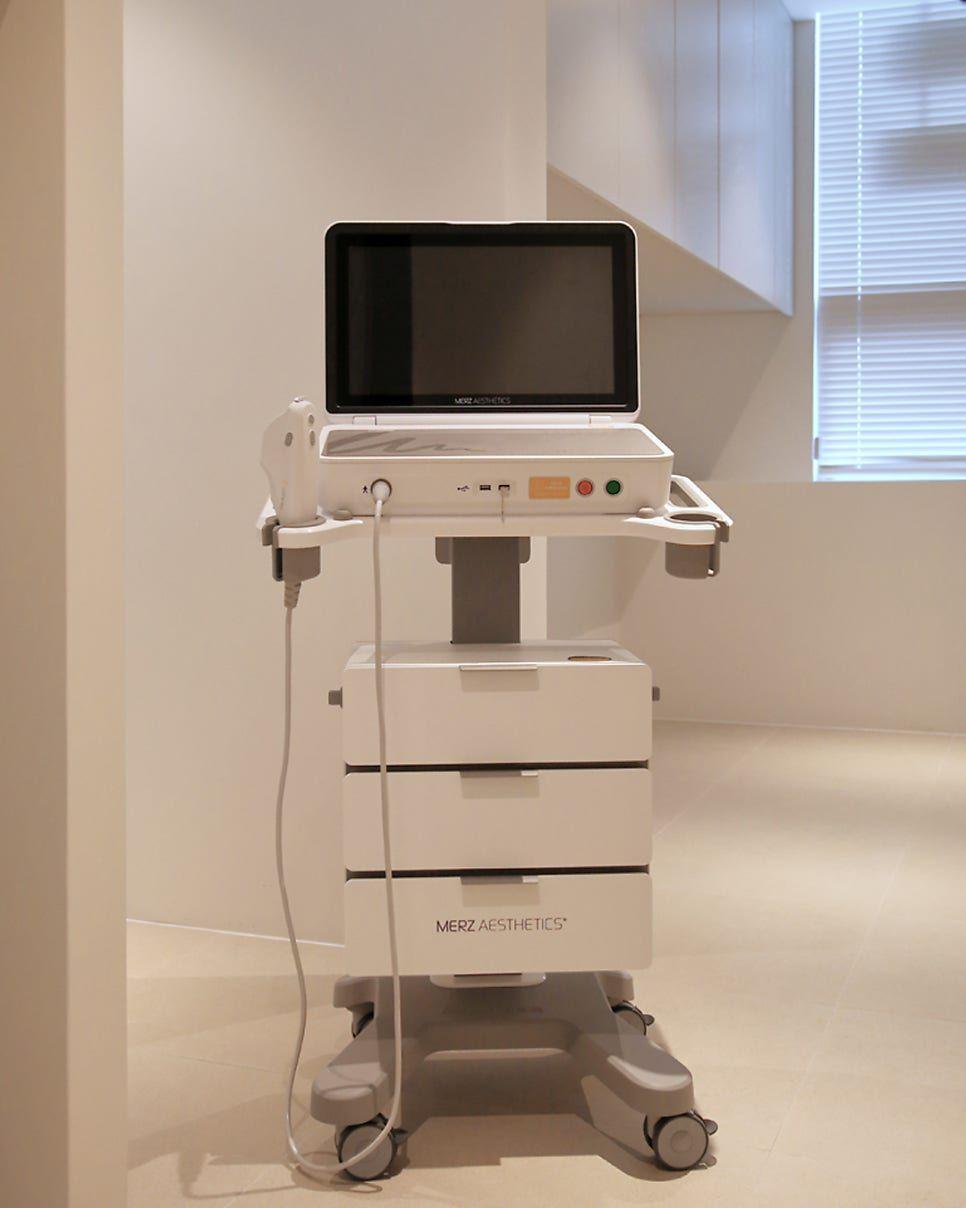
Step 1: NFC tag on the device. Genuine Ultherapy devices carry an NFC sticker. With your phone's screen open and NFC turned on, hold it close to the sticker on the clinic's device. A pop-up confirms whether the device is genuine.
Step 2: QR code on the tip. After the device check, scan the QR code on the tip itself. This checks each individual tip, so you have two layers of confirmation.
Step 3: Official clinic finder. Merz Aesthetics Korea, the importer, runs an official Ultherapy clinic finder. You can search for the clinic before you book to see whether it is listed as a genuine-device site.
Step 4: Photograph the screen. Right after treatment, the monitor shows the total shots and the tip information. Take a photo of that screen for your own record.
Five questions to ask before comparing prices
- "Can I confirm the tip is genuine and see the remaining shots?"
- "How many shots will you place on each area of my face?" Look for a plan by area, not just a total.
- "How will you split the depths?" Listen for an answer about your skin thickness.
- "Who performs the treatment?" The person who consults and the person who treats are sometimes different. Confirm the treating doctor.
- "Why is Ultherapy right for me?" This is the most important one. For some face types, Ultherapy is not the answer at all.
If all five get a clear answer, the price, high or low, probably has a reason behind it. If the first answer you hear is "This price is only if you pay today," it is fine to take a day to think.
What I think
This is not an argument that expensive clinics are better. There are honest low prices, and there are expensive treatments without a plan. Price is not proof of quality in either direction.
My one standard is this: compare explanations, not prices. A clear diagnosis of your face, a plan for depth and placement, and information about the operator. If a clinic is open about these, its price has a reason. If it explains nothing, any price is too high.
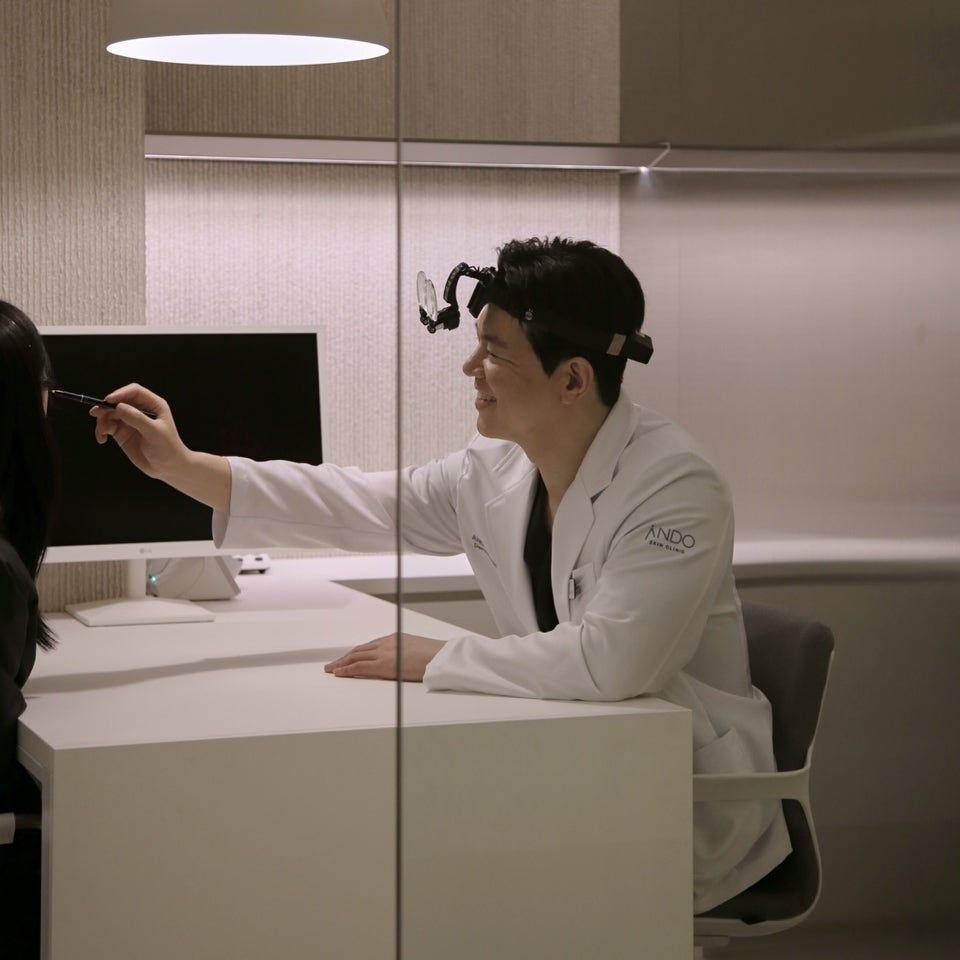
We hold ourselves to the same standard. In consultation, I draw the placement plan by area and show it to you. If you want to check the tip, we do it with you.
If it were my face, I would ask all five questions even at a clinic I trusted. Not because I expect a bad answer, but because a good clinic is glad to answer them.
Planning Ultherapy around your trip
Ultherapy at ANDO uses Ultherapy Prime, with real-time ultrasound imaging. Under our treatment standards, a session takes 30–90 minutes depending on the plan, and most people return to normal activities the same day. Swelling, redness or tenderness can appear and varies by person.
Results build gradually from about 3–4 weeks, so you will likely see the change after you get home. The usual interval is 6–12 months.
- Book ahead; we are closed on Sundays and public holidays.
- Our Ultherapy prices are listed in KRW by shot count and exclude 10% VAT. The final plan is confirmed in consultation.
- We are a 3-minute walk from Exit 2 of Jamsilsaenae Station (Line 2), near Seokchon Lake and Lotte World Tower.
- You don't have to decide in the consultation room.
Summary
- The same shot count can mean very different treatments.
- Check the device NFC tag, the tip QR code and the Merz official clinic finder, and photograph the screen afterward.
- Ask about depth, placement and the operator before you compare prices.
- A low price is not automatically a bad sign, but it can't answer these questions for you.
Results vary between individuals. Ultherapy can cause temporary swelling, redness, tenderness and, rarely, other side effects; your suitability is decided after examination.
If you have a quote from another clinic, or questions about genuine tips, send them with a few face photos on WhatsApp. Our team will reply with Dr. Jang's view on whether Ultherapy fits your face and how he would plan it. When you are ready, book an Ultherapy consultation.
Questions
Is it rude to ask a clinic to show the Ultherapy tip?
No. The tip is a consumable with a set number of shots, and patients can ask to confirm that it is genuine and how many shots it has left. At ANDO Clinic Jamsil we check it with you on request.
Does a cheap Ultherapy deal mean it is fake?
Not necessarily. Some low prices come from honest, smaller margins. The problem is that a price list cannot show the difference, so you need to ask about the tip, the depth plan, the placement and who performs the treatment.
What do the different Ultherapy tip depths do?
Ultherapy tips reach different depths: 4.5 mm, 3.0 mm and 1.5 mm. Thicker areas such as the jawline usually need the deep tip to reach the SMAS. Thinner areas such as around the eyes and forehead are treated more carefully with shallower tips.
Can I take a photo of the screen after treatment?
Yes. Photographing the screen right after treatment, showing the total shots used and the tip information, is a simple record for you to keep.
Results vary from person to person. Side effects such as redness, swelling or bruising can occur. The doctor will explain the risks for your treatment at the consultation.
Related articles
Planning lifting treatment around a Seoul trip: timing and order
Every lifting treatment has two clocks: how fast you recover and how slowly results build. Plan a Seoul trip around both, and choose boosters by their recovery time.
ONDA for a double chin: when to reduce before you lift
A heavy jawline is either loosened or thick. Lifting fixes loosening. ONDA reduces thickness. If you have both, the order matters: reduce first, then lift.
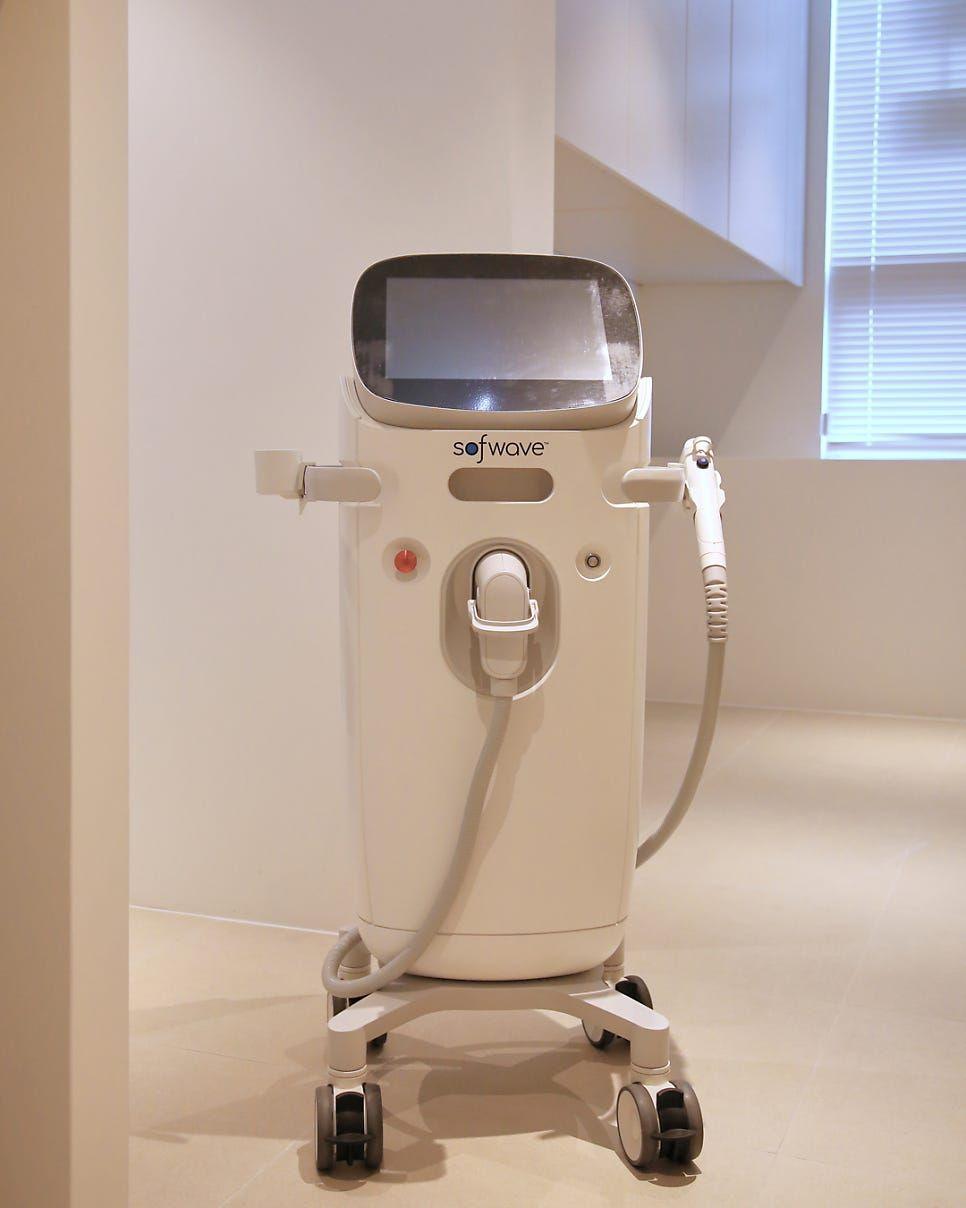
Sofwave for fine lines and pores: who it suits, who it doesn't
Sofwave is not a lighter Ultherapy. It works on a shallower layer, the mid-dermis, and for fine lines around the eyes and mouth it is often the first device I look at.