
Lifting
How many Ultherapy shots do you need? 300 vs 600 explained
Two people can both get 600 Ultherapy shots and see different results. The number matters less than where the energy goes, and that depends on the structure of your face.

Written and reviewed by Dr. Hanaram Jang, Medical Director
Published / 5 min read
On this page
"Doctor, how many shots should I get? Isn't more better?" This is the question I hear most during Ultherapy Prime consultations. Many people assume 600 shots will lift more than 300, simply because the number is bigger.
Lifting doesn't work that simply. The result depends less on the shot count and more on how the energy is designed around the structure of your face. That is why two people can both receive 600 shots, and one is pleased while the other feels little changed.
Here is why the number is not the whole story, and how we plan shots at ANDO Clinic Jamsil.
Why people focus on the number
Numbers are the easiest thing to compare. 600 is more than 300, and 900 is more than 600. It is natural to think more must be better. Some ads also put the shot count first.
But Ultherapy does not treat the skin surface. It delivers ultrasound energy to set depths under the skin to cause tissue contraction and new collagen. So the real question is whether the energy landed in the right place.
What Ultherapy actually treats
The face is not one sheet of skin. Under the surface, several layers connect and support each other:
- the dermis
- the fat layer
- the retaining ligaments
- the SMAS (the fascia that holds the face up)
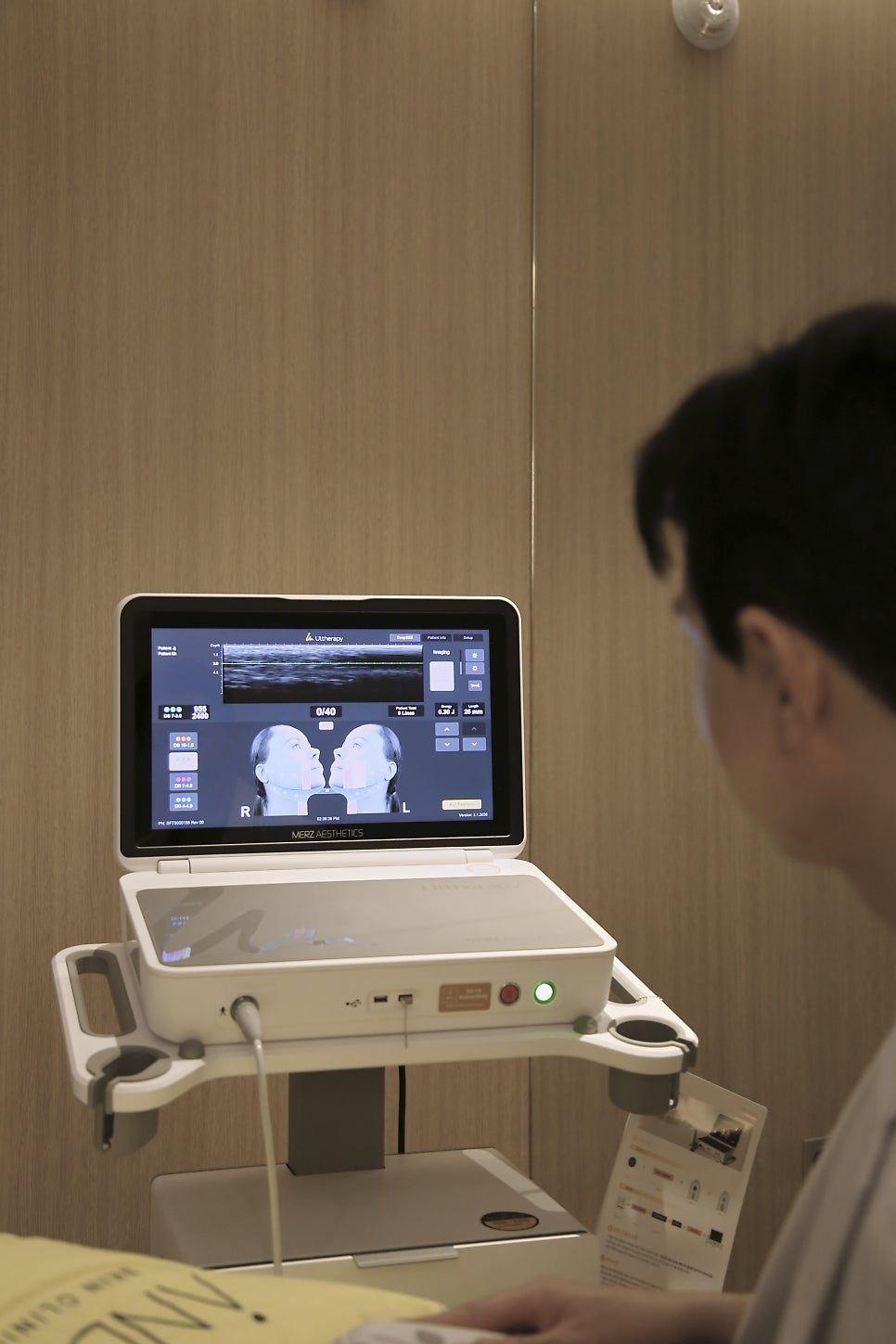
With age, it is not only the skin that loosens. This whole structure slowly moves downward. Ultherapy Prime sends energy to the layer that needs it. Ultherapy Prime also shows a real-time ultrasound image, so the doctor can see where the SMAS actually sits in your face before firing. With the same shot count, the result depends on whether the energy reached the target layer.
Same 600 shots, different results
Imagine two people who each receive 600 shots. The count is identical. The result may not be.
One plan spreads 600 shots evenly across the whole face. Another concentrates them along the structures where sagging starts. Lifting means focusing energy where the supporting structure needs it.
A good result comes from design, not from the number.
What sets the shot count
At ANDO, we look at your face before we talk about numbers. These are the points I check:
| What I assess | Why it matters |
|---|---|
| Face shape | Decides where support is needed and where it is not |
| Where the fat sits | Some areas need care not to reduce volume |
| Skin thickness | Thicker areas need deeper energy; thin areas need caution |
| Direction of sagging | Energy lines follow the direction you want to support |
| Strength of the retaining ligaments | Affects how the lift holds |
| Where the SMAS actually is | Confirmed on the device's ultrasound image |
From this, I design the lines the energy should follow. For someone whose jawline has dropped first, the lines run to support the jawline. For someone with deep cheek sagging, I don't just fire across the middle of the face. I place energy around the support structures that cause the sag.
The same shot count with different lines can give a different result. That is also why the count can go up or down after the examination.
Depth matters as much as count
Shot count is only one axis. Ultherapy tips reach different depths: 4.5 mm, 3.0 mm and 1.5 mm. The deep tip is used where the skin is thick and the SMAS must be reached, such as along the jawline and lower cheeks. Shallower tips are used with more care on thin areas such as around the eyes and forehead.
So a plan has two numbers for each area: how deep, and how many. A plan that only states the total leaves out half the information.
When more shots are not the answer
Sometimes the honest answer is that Ultherapy is not the main tool. If a double chin or heavy lower cheeks are the issue, adding shots will not remove volume; a fat-reducing treatment such as ONDA comes first. If fine lines and texture bother you most, a dermis treatment such as Sofwave or Thermage may fit better. Raising the shot count cannot fix a problem in a layer Ultherapy is not aimed at.
Our menu, and how to read it
Our Ultherapy menu lists Ultherapy Prime at four shot counts. Prices are in KRW, as of November 2026, and exclude 10% VAT.
| Ultherapy Prime | Price (KRW) |
|---|---|
| 200 shots | ₩790,000 |
| 400 shots | ₩1,450,000 |
| 600 shots | ₩2,120,000 |
| 800 shots | ₩2,790,000 |
Treat these as a menu, not a prescription. Many people arrive asking for "300" or "600" because those numbers appear in reviews. After the exam, the number I suggest may be lower or higher, and I will explain why. You can see all options on the full price list.
If it were my face
I'm in my 40s, and my jawline is the first thing I notice changing. If I were the patient, I would not ask "How many shots?" I would ask "Where will the lines go, and why?" Then I'd accept whatever count that plan needs, no more.
Good questions to bring to any Ultherapy consultation:
- "Why do I need this number of shots?"
- "Which areas will you focus on?"
- "In which direction will you design the energy for my face?"
Planning around your Seoul trip
Under our clinic's treatment standards, an Ultherapy session takes 30–90 minutes depending on the plan, and recovery is same day. Larger shot counts take longer, so leave a half day free. Swelling, redness or tenderness can appear and varies by person.
Changes tend to show gradually from about 3–4 weeks. If you are in Seoul for a short visit, you will likely see the lift develop at home. The usual interval before repeating is 6–12 months.
Book ahead, since we are closed on Sundays and public holidays. We are a 3-minute walk from Exit 2 of Jamsilsaenae Station (Line 2), near Seokchon Lake. You don't have to decide the shot count in the consultation room. Take the plan back to your hotel if you want.
Summary
- More shots do not automatically mean more lift.
- Skin thickness, fat, ligaments, sagging direction and the real SMAS position set the plan.
- The design of energy lines changes the result more than the total count.
- Ask why a number is right for you, and which areas it covers.
Results vary between individuals. Ultherapy can cause temporary swelling, redness and tenderness; suitability and shot count are decided after examination.
If you already have a shot count in mind, send it on WhatsApp with front and side photos of your face. Our team will share Dr. Jang's first view on the areas he would focus on and a likely shot range. Then book an Ultherapy consultation for your dates in Seoul.
Questions
Does a higher Ultherapy shot count give a better result?
Not necessarily. The result depends more on how the energy is planned for your face than on the number itself. Skin thickness, fat and the direction of sagging change both the number of shots needed and where they go.
How many Ultherapy shots should I get?
There is no single right number. The doctor evaluates the area that needs lifting, your skin condition and the degree of aging. Applying the same count to everyone is not always appropriate.
Why do retaining ligaments matter for Ultherapy?
Retaining ligaments are part of the structure that supports skin and soft tissue. As we age, changes in these supports contribute to sagging, so a lifting plan should consider them along with the SMAS.
Why do results differ between clinics using the same device?
The facial analysis, treatment depth, shot density, placement and the operator's plan can all differ. Together they explain why the same device can give different results.
Results vary from person to person. Side effects such as redness, swelling or bruising can occur. The doctor will explain the risks for your treatment at the consultation.
Related articles
Planning lifting treatment around a Seoul trip: timing and order
Every lifting treatment has two clocks: how fast you recover and how slowly results build. Plan a Seoul trip around both, and choose boosters by their recovery time.
ONDA for a double chin: when to reduce before you lift
A heavy jawline is either loosened or thick. Lifting fixes loosening. ONDA reduces thickness. If you have both, the order matters: reduce first, then lift.
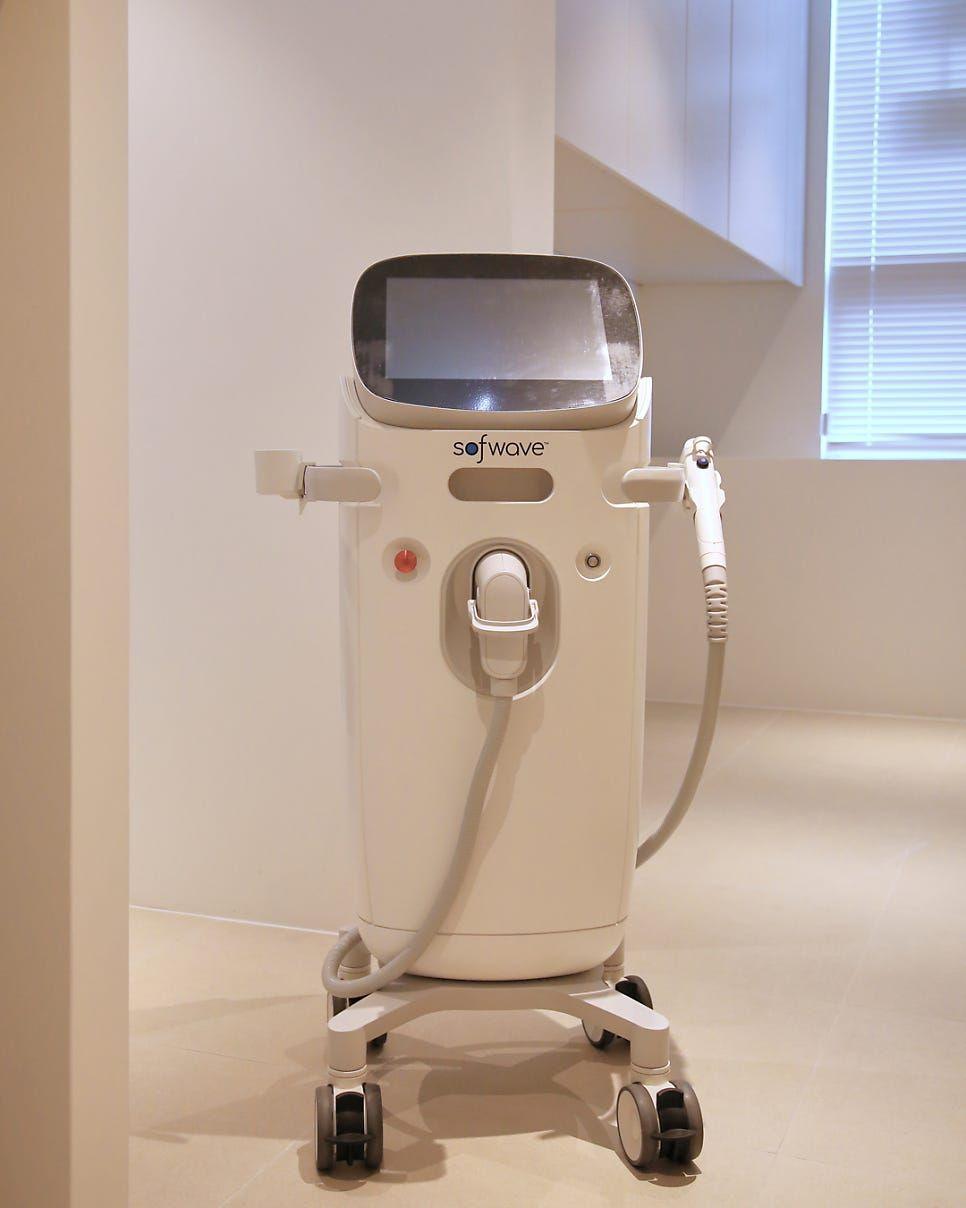
Sofwave for fine lines and pores: who it suits, who it doesn't
Sofwave is not a lighter Ultherapy. It works on a shallower layer, the mid-dermis, and for fine lines around the eyes and mouth it is often the first device I look at.