
Pigmentation
Melasma treatment in Korea: why clinics give different answers
Clinics disagree about melasma because what patients call melasma is often several pigments mixed together. Here is why diagnosis comes first, and why melasma is managed rather than cured.

Written and reviewed by Dr. Hanaram Jang, Medical Director
Published / 5 min read
On this page
Many people who come to me with melasma have already been to two or three clinics. Clinic A recommended basic toning. Clinic B recommended pico toning. Clinic C prescribed tablets and said, "Let's watch for now." Same face, three answers.
They ask me which one was right. My answer starts somewhere else: the clinics disagreed because "melasma" is often not one thing.
The misunderstanding: melasma is a single diagnosis
Many of the pigments patients call melasma are actually different pigments, or several mixed together. Five are commonly confused:
- Melasma: symmetrical on both cheeks, with blurred, hazy edges. Influenced by hormones and UV, and closer to a chronic condition.
- Freckles: small dots scattered since childhood.
- Sun spots and age spots: individual spots with clear edges.
- Deep pigment such as nevus of Ota or ABNOM: gray-brown or bluish, sitting much deeper.
- Post-inflammatory hyperpigmentation (PIH): marks left after acne, injury or, sometimes, a laser treatment.
In the consultation room, two or three of these on one face is far more common than melasma alone. If the pigments differ, the treatment has to differ. That is one reason clinics give different answers. The other reason is equipment: each clinic tends to recommend what it owns and is used to. If the only tool you have is a hammer, everything looks like a nail.
Pigment depth decides the laser
Pigments sit at different depths in the skin.
| Pigment | Where it sits |
|---|---|
| Freckles, sun spots | Epidermis, the outermost layer |
| Melasma, PIH | Near the junction of epidermis and dermis, often tangled with vessels and inflammation |
| Nevus of Ota, ABNOM | Deeper in the dermis |
A laser's wavelength decides how deep it reaches and what it targets. Roughly, 532 nm works shallow on epidermal pigment, 755 nm works at mid depth and selects melanin well, and 1064 nm reaches deep dermal pigment. Settings are adjusted for each target.
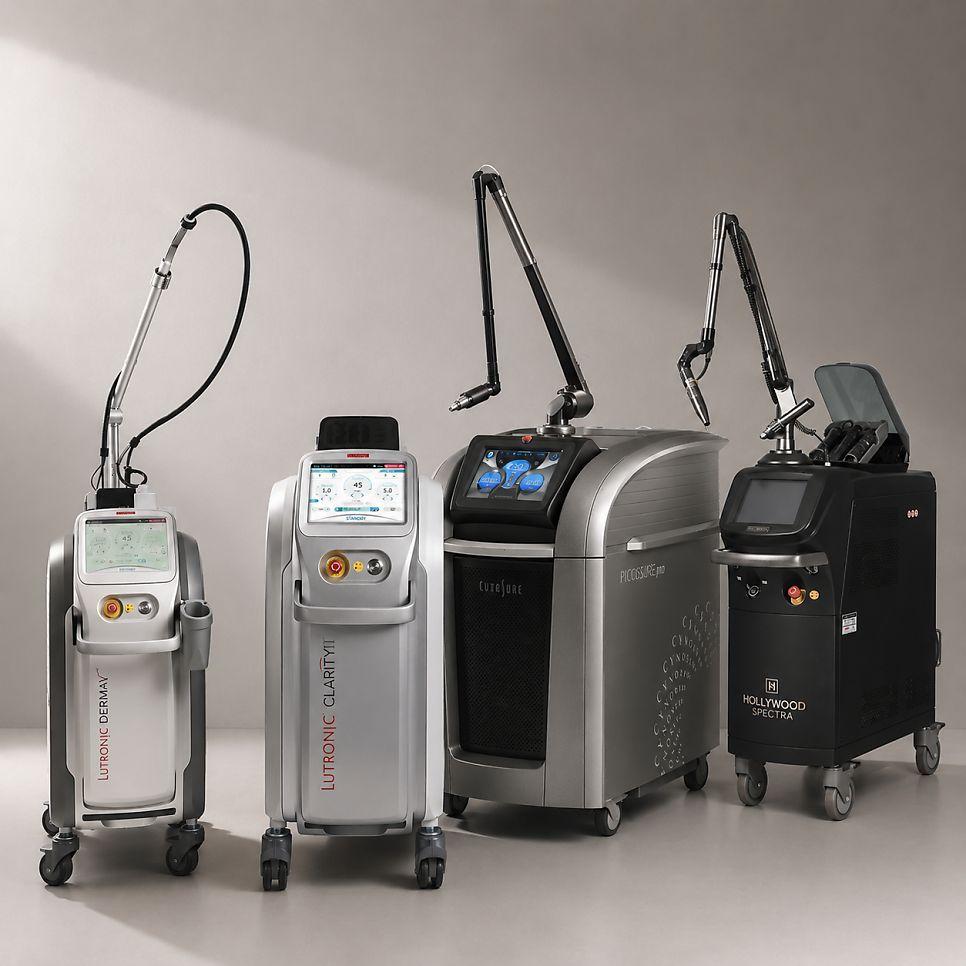
Using a deep wavelength on shallow pigment adds unnecessary irritation. Using a shallow wavelength on deep pigment never reaches it, no matter how many times you repeat it. This is why ANDO runs six pigment lasers: PicoSure Pro, Hollywood Spectra, Derma V, Clarity II, Erbium YAG and the A+ 1450 nm laser. It is not about owning more machines. It is about having the right wavelength for each pigment mixed on the same face.
Why melasma comes back: the three engines
Melasma is produced by what I call a melanin factory with three engines:
- Hormones: pregnancy, hormonal change and constitution. A laser cannot reach this.
- UV: daily exposure from commuting, driving and sitting by windows.
- Vessels and inflammation: enlarged vessels and low-grade inflammation in the melasma area keep stimulating pigment cells.
A laser can break down the "stock" of pigment the factory has built up. It cannot shut the factory down. If you remove the stock and stop, the factory builds it again. Recurrence is not proof that treatment failed. It is how melasma behaves.
The ANDO order: diagnose, calm, target, maintain
I believe the order of treatment shapes the result more than the choice of laser.
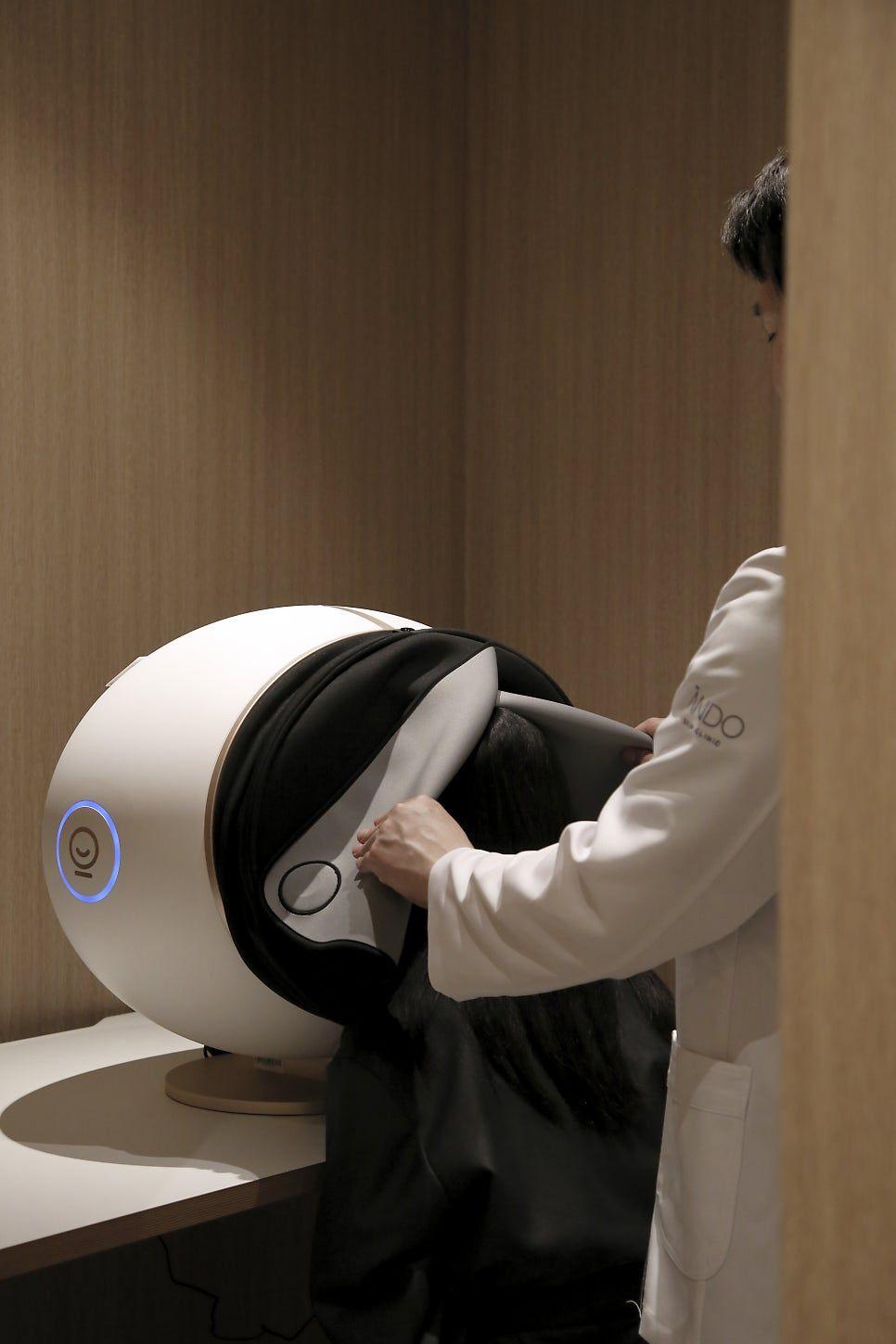
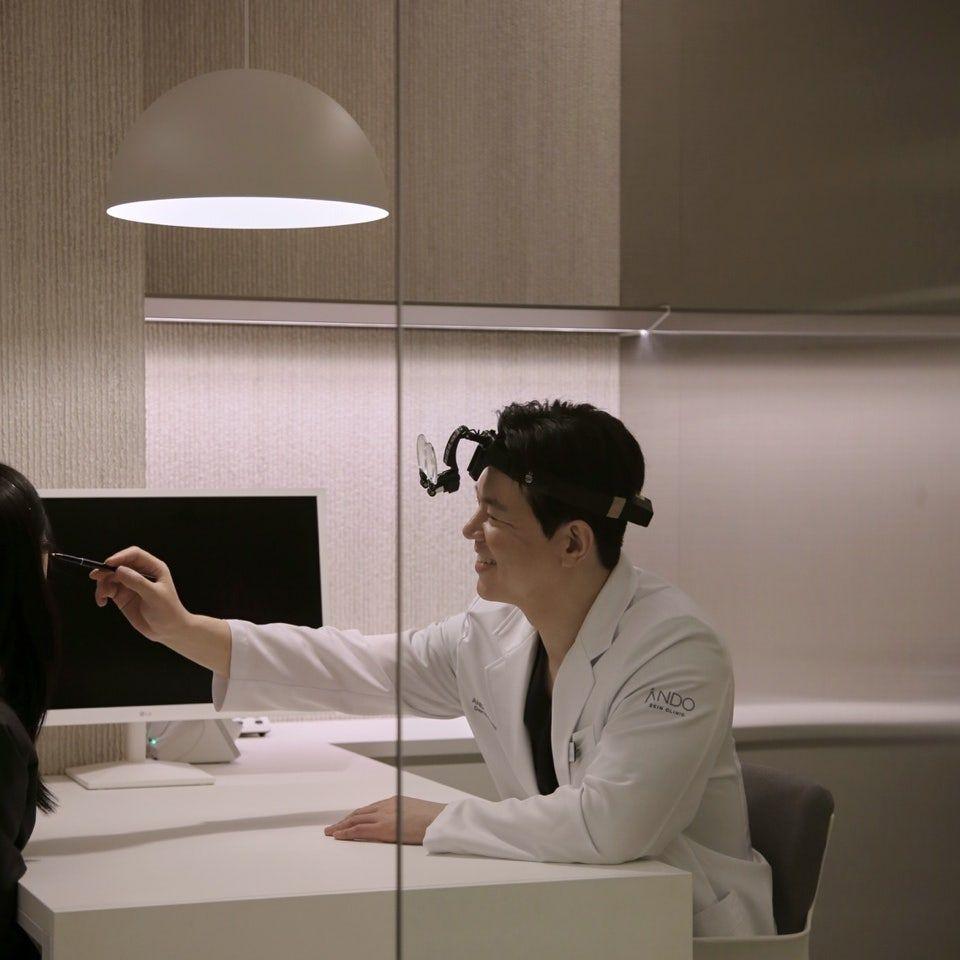
- Diagnosis. I take a history and look at the skin under magnification and with an AI skin analysis device to see which pigments are present and how they are mixed. I do the consultation myself.
- Calming the skin. If there is inflammation, sensitivity or barrier damage, a laser can make pigment darker. Calming comes first.
- Targeted treatment by type. Different wavelengths and intervals for each pigment. For melasma that means low energy over many sessions, usually with laser toning. Spots with clear edges may suit PicoSure, and raised lesions need precise removal.
- Maintenance. Once melasma is lighter and stable, we don't stop. We widen the intervals and keep going lightly, and step in early if it starts to darken.
Alongside the laser, we use three levers that match the three engines: lighten the accumulated pigment with low-energy toning, suppress production with options such as tranexamic acid when your doctor prescribes it, and block the fuel with daily sunscreen and less rubbing and heat. Doing only one of the three usually loses to recurrence.
This order can look slow. In pigment treatment, the cost of rushing is much higher than the cost of waiting.
If it were my face
I would choose the clinic that says "manage" honestly over the one that says "cure" easily. A promise of a cure sounds better, but the cost of that promise is paid by the patient, alone, in front of the mirror a few months later.
And I would ask one question in every consultation: "Which pigments are mixed on my face, and why this treatment for them?" A clinic that answers with a diagnosis is worth trusting. If a package price list appears before any explanation, it is fine to think again.
Planning melasma treatment around a trip to Seoul
- One visit will not finish melasma. A trip is a good time for diagnosis, a first session and a clear plan. Ask for a written plan you can continue with a doctor at home.
- Toning usually allows same-day sightseeing. Your doctor will confirm for your skin and the lasers used.
- Sun during the trip matters. Walking all day in Seoul, especially in summer, is real UV exposure. Wear sunscreen, a hat and reapply. Treated skin is more sensitive to UV for a while.
- Bring your history: names of previous treatments, number of sessions, intervals, creams and medicines you use. If your melasma got darker after treatment elsewhere, tell us when it started; that changes the plan.
- Booking: we are closed on Sundays and public holidays. Book ahead so the diagnosis is not rushed.
Toning and pigment laser prices are on the pigmentation price list. Listed prices exclude 10% VAT.
Summary
Clinics say different things about melasma because many "melasma" faces are a mix of pigments at different depths, and because clinics favor their own equipment. Diagnosis comes before any laser. Melasma is managed, not cured: lighten, suppress, block, then maintain.
Results vary between individuals. Laser treatment can cause temporary redness, darkening or, with excessive treatment, light spots; your doctor will explain the risks for your skin.
If you want to know what is actually on your face before you plan a trip, send clear photos in daylight without makeup on WhatsApp, along with your treatment history. We can tell you what we suspect and what we would need to confirm in person. You can also book a pigmentation consultation.
Questions
Can melasma be cured?
I can't promise a cure. Melasma is driven by hormones, UV and vascular or inflammatory factors that a laser cannot switch off. What we can do is lighten it and keep it in a controlled, lighter state with a maintenance plan.
Why can't you quote a melasma price by message?
Because many faces that look like melasma have two or three pigment types mixed together. Until we see which pigments are there and how they are mixed, the treatment itself is not decided. Photos help us give a rough direction, and the final plan comes after an in-person diagnosis.
Can I take tranexamic acid for melasma?
Tranexamic acid is one option for reducing pigment production, but some people should not take it depending on their health. It must be prescribed by a doctor after an assessment.
Is one laser enough for melasma?
Usually not on its own. Melasma treatment combines low-energy toning, calming the skin, controlling pigment production where appropriate, and daily sun protection. The laser is only one of these parts.
Results vary from person to person. Side effects such as redness, swelling or bruising can occur. The doctor will explain the risks for your treatment at the consultation.
Related articles

Pigmentation darker after laser? Why it happens and what to do
Darker pigment after laser does not always mean failure. It is a temporary reaction, a problem of treatment order, or a problem of diagnosis, and each needs a different response.
Laser toning for melasma: how many sessions, and when to stop
Toning in many sessions is normal. Toning without anyone judging the response is the problem. Here are the four warning signs, and why one laser cannot treat every pigment.
Melasma, freckles or sun spots? How to tell pigment types apart
"Dark spots" can mean seven different things, at three different depths. A simple mirror check gives you a rough map, and a better question to ask in any consultation.