
Pigmentation
Melasma, freckles or sun spots? How to tell pigment types apart
"Dark spots" can mean seven different things, at three different depths. A simple mirror check gives you a rough map, and a better question to ask in any consultation.

Written and reviewed by Dr. Hanaram Jang, Medical Director
Published / 5 min read
On this page
"I've thought it was melasma for ten years."
I hear this often. When we examine these patients, many have a different pigment altogether. More often, they do have melasma, but mixed with something else. "It wasn't melasma" usually turns out to mean "it wasn't only melasma."
This post gives you a three-minute mirror check. It won't make you your own doctor. It will give you a rough map of your face, so you can ask a better question in any consultation.
The misunderstanding: "dark spots" is a diagnosis
"Dark spots," "pigmentation" and the Korean word jabti are umbrella terms. They group several conditions that sit at different depths and need different, sometimes opposite, treatments. What decides the treatment is one thing: where in the skin the pigment lives.
Seven pigments at three depths
| Depth | Pigment | Typical signs |
|---|---|---|
| Epidermis (shallow) | 1. Freckles | Dots on the nose and cheeks since childhood, darker in summer |
| 2. Sun spots (solar lentigines) | From years of sun, on areas that get the most sun, flat | |
| 3. Seborrheic keratosis (age spots) | The skin thickens and the spot is raised or rough; needs reshaping, not just color removal | |
| Junction of epidermis and dermis | 4. Melasma | Symmetrical on both cheeks, hazy edges; linked to hormones, UV and vessels |
| 5. Post-inflammatory hyperpigmentation (PIH) | Left after acne, injury or a procedure; can be shallow or deep | |
| Dermis (deep) | 6. Nevus of Ota | Gray-blue or gray-brown, usually around one eye or temple, often starting in childhood |
| 7. ABNOM | Similar color, appears in adulthood on both cheekbones; easily mistaken for melasma |
What happens when the diagnosis is wrong
- Treat seborrheic keratosis as melasma with repeated toning, and months later the spot is still there. A thickness problem is not solved by removing color.
- Treat ABNOM as melasma, and the laser never reaches deep enough. The conclusion becomes "it doesn't come off."
- Treat melasma as a sun spot with strong energy, and it can turn darker.
These are treatments that point in different directions.
The mirror check: seven questions
Stand in daylight in front of a mirror, without makeup, and tick everything that applies.
- Dots on the nose and cheeks since before your teens, darker every summer → possible freckles
- A brown spot with clear edges that feels flat, in a sun-exposed area → possible sun spot
- A spot with clear edges that feels raised or rough, and there are more of them over time → possible seborrheic keratosis
- Appeared after 30, symmetrical on both cheeks, edges hazy → possible melasma
- Not brown but gray-brown or bluish, mainly around one eye or temple → possible nevus of Ota
- Small gray-brown dots on both cheekbones, symmetrical, appeared in adulthood → possible ABNOM
- Appeared where acne, a cut or a treatment was, and you remember the event → possible PIH
The pairs people confuse most
- Sun spot vs seborrheic keratosis: touch it. Flat leans toward sun spot; raised leans toward seborrheic keratosis.
- Melasma vs ABNOM: look at the shape. A hazy patch leans melasma; clusters of small dots on the cheekbones lean ABNOM.
- Nevus of Ota vs ABNOM: when and where. From childhood on one side leans Ota; adult onset on both sides leans ABNOM.
Ticked more than one? That's normal
The most common face in my clinic is not melasma alone. It is something like melasma plus sun spots plus PIH. Melasma needs low energy over a long time. Seborrheic keratosis needs the lesion itself targeted precisely. PIH needs patience. Deciding the order of these on one face is where self-checking ends and diagnosis begins.
How we match pigment to treatment at ANDO
At ANDO we start by mapping the whole face, not by removing one spot. Then the direction follows the type:
| Type | Main approach |
|---|---|
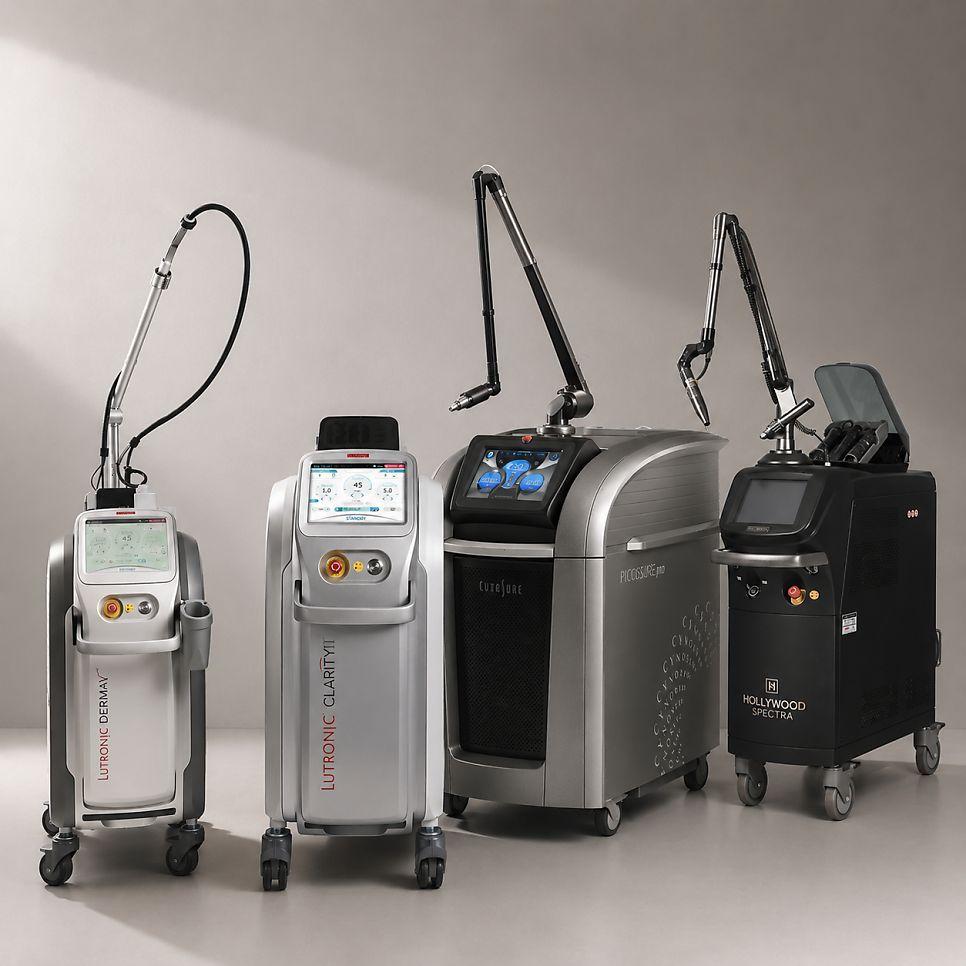
| Epidermal pigment with clear edges | PicoSure Zoom Pass, Clarity II |
| Dermal or mixed pigment that spreads or returns | Long-term plan built on laser toning (pico and Q-switched) |
| PIH | Calming and redness care alongside |
| Pigment with visible redness around it | Vessel and redness laser alongside |
| Raised benign lesions | Precise removal with Erbium laser (spot removal) |
We have PicoSure Pro, Hollywood Spectra, Clarity II, Derma V and others. The number of devices matters less than which one is used, in what order and at what strength. At each session we check the skin's response and adjust.
One more point. Skin looks good when its color is even, not when it is bright. A face with melasma, spots, redness and post-acne marks has many small color differences, and that reads as tired skin, even if the skin is fair. The goal is fewer differences, not "whiter."
If it were my face
I would take this map into the consultation and ask: "Which of these seven are mixed on my face, and in what order will you treat them?" A doctor who answers by drawing it out for you is a good sign. Knowing a little more leads to better questions, and better questions lead to better care.
Planning a pigment visit in Seoul
- Diagnosis first, ideally early in your trip. Some treatments for epidermal spots leave small scabs or temporary darkening for a few days; ask how long before you book anything with photos.
- PicoSure-treated skin is more sensitive to UV for several days. Plan indoor days or keep strong sun protection while sightseeing.
- Raised lesion removal with Erbium laser leaves small wounds that need aftercare; your doctor will tell you how many days to allow before flying and what to apply.
- Continue at home: melasma and deeper pigment need a series. Ask for a written plan and your settings so your next doctor can follow them.
Prices for toning, PicoSure and spot removal are on our pigmentation price list. Prices exclude 10% VAT and are charged in KRW.
Summary
Seven different pigments hide behind the words "dark spots," at three depths. Shallow spots, junction pigment like melasma and deep dermal pigment each need different lasers, intervals and patience. Use the mirror check to build a rough map, then let diagnosis decide the order.
Results vary with pigment type, depth and skin condition. Pigment treatment can cause temporary redness, scabbing or darkening, and recurrence is possible, especially with melasma.
If you are not sure what is on your face, send two or three daylight photos without makeup on WhatsApp, and tell us which mirror-check questions you ticked. We will tell you what we suspect and what needs an in-person look. When you are ready, book a pigmentation consultation.
Questions
Can a skin analyzer tell melasma from sun spots?
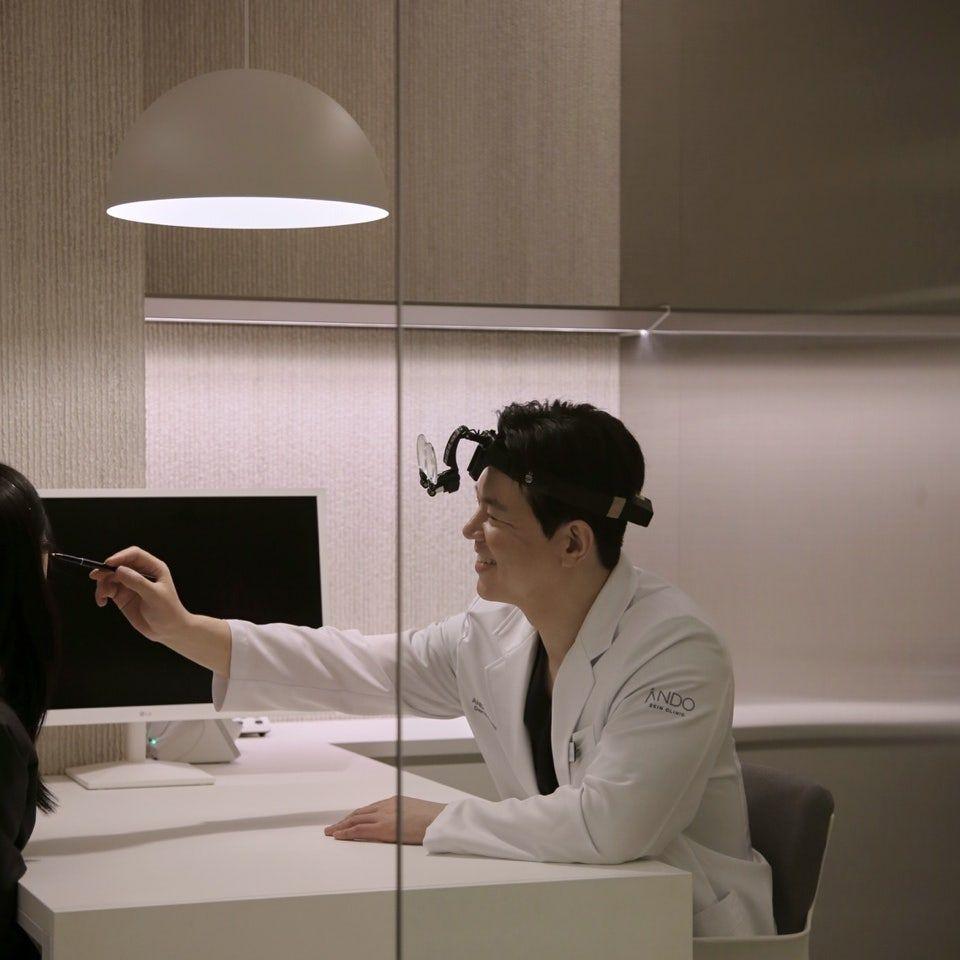
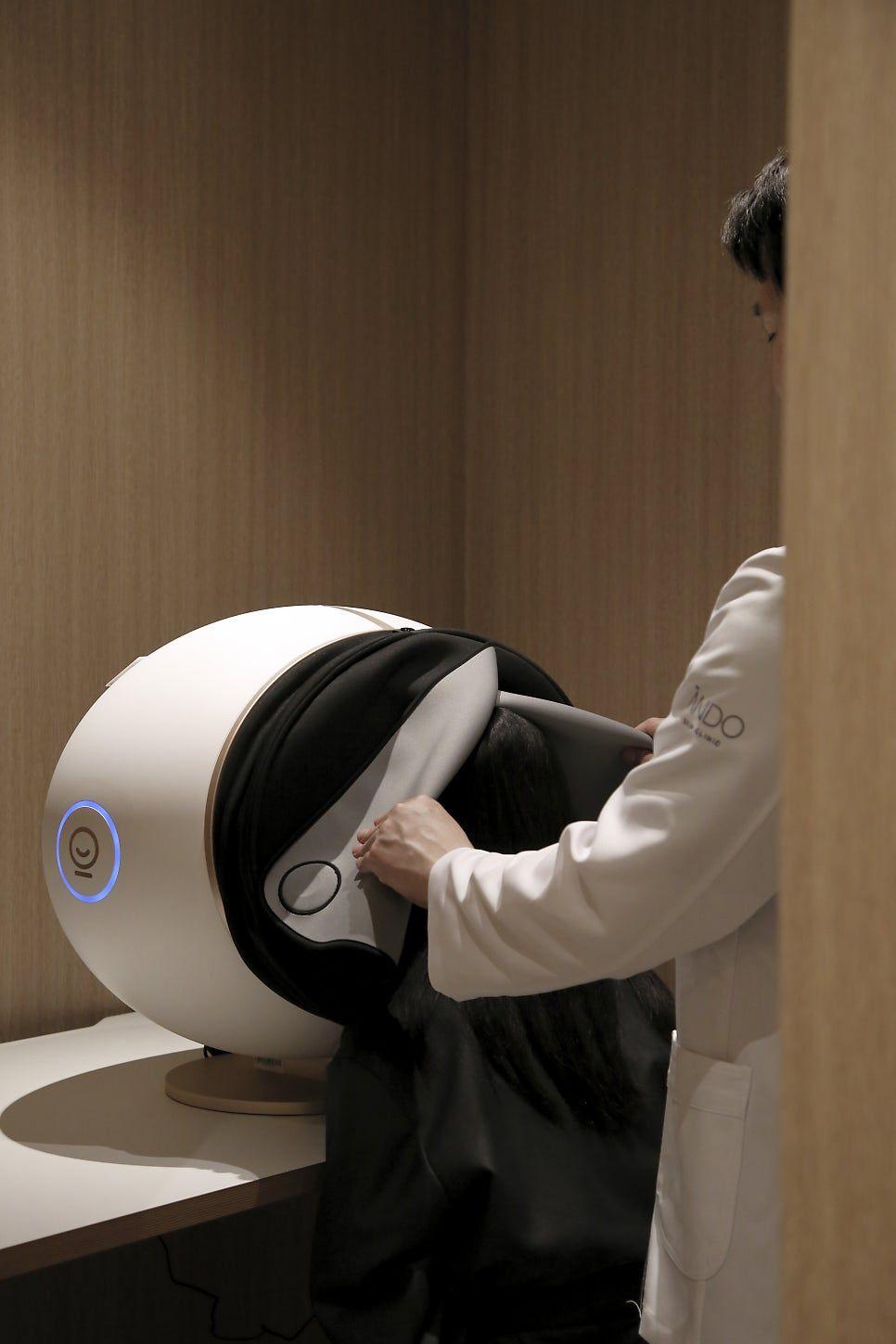
It helps. Magnification, a Wood's lamp and AI skin analysis show depth and borders that are hard to see with the eye. They support the doctor's examination rather than replacing it.
Can melasma and sun spots be treated with the same laser?
Not necessarily. Sun spots sit in the epidermis and usually respond to targeted pigment lasers. Melasma sits deeper, reacts to heat and is treated with low energy over many sessions. Treating melasma like a sun spot can make it darker.
My skin is fair but still looks uneven. Why?
Skin looks clear when its color is even, not when it is pale. Patches of melasma, spots, redness and post-acne marks create color differences that make skin look tired, even on light skin.
What is "jabti" that Korean clinics mention?
It is a Korean umbrella word for small spots, roughly freckles, sun spots and age spots together. It is not a diagnosis, so ask which of those you actually have.
Results vary from person to person. Side effects such as redness, swelling or bruising can occur. The doctor will explain the risks for your treatment at the consultation.
Related articles

Pigmentation darker after laser? Why it happens and what to do
Darker pigment after laser does not always mean failure. It is a temporary reaction, a problem of treatment order, or a problem of diagnosis, and each needs a different response.
Laser toning for melasma: how many sessions, and when to stop
Toning in many sessions is normal. Toning without anyone judging the response is the problem. Here are the four warning signs, and why one laser cannot treat every pigment.
Melasma treatment in Korea: why clinics give different answers
Clinics disagree about melasma because what patients call melasma is often several pigments mixed together. Here is why diagnosis comes first, and why melasma is managed rather than cured.